

With 29 European nations now enforcing the automated Entry/Exit System, crossing the French border has transitioned from a simple passport stamp to a sophisticated digital procedure. But do you truly possess the specific documentation required to navigate these new biometric kiosks without facing immediate refusal?
A single oversight regarding passport validity or financial proof can abruptly terminate your journey at the boarding gate. We have curated this definitive guide to the latest france travel requirements to ensure your arrival is as seamless as the experiences awaiting you.
- Primary Entry Standards and Passport Validity
- Visa Categories and the 90-Day Schengen Rule
- What Documents Must You Carry?
- The New Biometric Border Experience
- 5 Customs Rules for Personal Belongings
- Local Regulations and Daily Compliance
Primary Entry Standards and Passport Validity
France requires passports valid for 90 days beyond departure, a 90/180-day visa-free limit for non-EU citizens, and mandatory proof of 65€ daily funds. Biometric EES registration is now active at all borders, tracking document validity.
Navigating the nuances of European borders demands more than just a ticket; it requires a meticulous eye for detail regarding your credentials.
The Three-Month Expiry Rule
The legal framework for entry is uncompromising. Border police strictly enforce the Schengen Borders Code for all international arrivals, leaving no room for administrative oversight or casual interpretation of the rules.
Your passport must maintain three months of validity beyond your departure date. The clock starts on your planned exit from Europe. Always check your expiration page carefully before booking any long-haul flights.
Dual citizens face specific logistical hurdles. You must use the same passport for entry and exit. This consistency prevents immediate administrative discrepancies within the newly active EES biometric database.
| Requirement Type | Standard |
|---|---|
| Passport Validity | 90 days post-departure |
| Daily Funds (Hotel) | 65€ per day |
| EES Registration | Mandatory Biometrics |
Restrictions on Emergency Travel Documents
We must address the specific 12-page US emergency passport issue. France does not recognize this document for visa-free entry. It frequently leads to immediate border refusal and a ruined itinerary.
Airlines are equally vigilant regarding boarding denials. Carriers check document types during check-in procedures. They face heavy fines for transporting passengers who possess invalid or unrecognized paperwork.
France does not recognize the 12-page US emergency passport for visa-free entry; airlines may deny boarding and face significant fines for non-compliance.
Verify your specific airline protocol before heading to the terminal. Contact your carrier 48 hours before flying. Ensure your temporary document meets current French Ministry of Interior standards for arrival.
Emergency passports are often restricted to transit only; always verify if your destination allows full entry before arriving at the gate.
Visa Categories and the 90-Day Schengen Rule
While passport validity gets you to the gate, understanding your permitted stay duration is what keeps your travel history clean. Navigating these regulations requires precision to ensure your French escape remains sophisticated and seamless.
Short-Stay Exemptions and the 180-Day Window
The 90/180 rule governs non-EU travelers strictly. It operates as a rolling window for visits. You should utilize an online calculator to monitor your remaining days with absolute accuracy.
Ignoring these limits invites severe consequences. You risk deportation or a multi-year ban from the Schengen Area. Fines are frequently imposed at the exit border control point.
Distinguishing between traveler categories is vital. Tourists and business professionals share this 90-day limit. Conversely, students typically necessitate a specific visa for stays exceeding three months.
To truly master your itinerary, you must understand the Essential France travel requirements for international visitors. Exploring the nuances of the region ensures your journey remains prestigious and uninterrupted.
Long-Stay VLS-TS Validation Procedures
Completing the online VLS-TS validation is mandatory within three months of your arrival. The process involves paying a digital tax stamp via the official portal. Failure to validate renders your stay illegal immediately.
This validated visa functions as a temporary residency permit. It grants you the privilege to travel freely across the Schengen zone. It represents your official transition into French life.
The OFII schedules a mandatory medical check-up for all long-term visitors. This appointment is a standard component of the integration process. It ensures public health standards are maintained.
To finalize your legal standing, ensure you have prepared the following elements for your administrative records:
- Visa validation fee
- OFII medical exam
- Residential address proof
What Documents Must You Carry?
Navigating the border requires more than just a valid passport. Beyond your visa, French authorities expect you to prove you can support yourself and have a plan to leave.
Proving Financial Means and Accommodation
Securing your entry depends heavily on demonstrating fiscal solvency. The French government mandates specific daily budgets based on your lodging arrangements. Failure to present these figures often leads to immediate entry refusal at the border.
| Accommodation Type | Daily Minimum | Required Proof |
|---|---|---|
| Hotel (prepaid) | 65€ | Booking confirmation |
| Hotel (not prepaid) | 120€ | Bank statements |
| Private home | 32.50€ | Attestation d’Accueil |
Travel insurance is a non-negotiable legal requirement. Your policy must cover at least 30,000 euros for emergency medical costs. Repatriation coverage is absolutely mandatory for all international visitors entering the territory.

Do not overlook the return ticket requirement. Border guards frequently demand proof of your scheduled onward travel. While digital copies are usually accepted, physical printouts remain a significantly safer option for inspection.
Understanding these essential France travel requirements for international visitors ensures a seamless transition to your luxury experiences in France. Preparation is the hallmark of the sophisticated traveler.
Private Stays and the Attestation d’Accueil
Staying with friends requires a formal hosting certificate process. Your host must apply at their local Mairie well in advance. This official document costs 30 euros in tax stamps and proves a legal residence exists.
Financial expectations shift when staying in private residences. You need exactly 32.50 euros per day if you possess an attestation. This reflects half the standard hotel rate required for self-funded stays.
Health remains a priority for seamless entry. Ensure all your routine vaccinations are strictly up to date. Fortunately, France does not currently require specific tropical vaccines for international entry at this time.
Precise documentation is the only currency border agents value.
“The Attestation d’Accueil is a formal document; a simple handwritten letter from your host is not legally sufficient for border control.”
The New Biometric Border Experience
Paperwork is only half the battle; the digital frontier is now changing how you physically cross into France.
Navigating the Entry/Exit System (EES)
Officers will scan your fingerprints and take a facial photo. This happens during your first entry into the Schengen zone. The process captures your biometric identity for security.
If the system shows an incorrect exit date, speak to the border police. Keep your boarding passes as physical proof. Accurate records are vital for your future European travels.
Have your passport open to the photo page. Remove glasses or hats before reaching the biometric kiosk. Preparation ensures a seamless transition through the new automated digital checkpoints.
Discover how we craft seamless journeys through our exclusive and private custom offers. Our expertise ensures your arrival remains effortless and refined.
EES tracks physical entry/exit with biometrics (active now). ETIAS is a pre-travel authorization (starting 2025). Fingerprints remain valid for 3 years.
ETIAS Authorization vs EES Registration
EES is the physical tracking system. ETIAS is the digital travel authorization required before you fly. One monitors your movement, while the other grants you permission to arrive.
It is not a visa but a security screening. Most applications are approved within minutes via an automated web portal. This pre-clearance is mandatory for all visa-exempt international visitors.
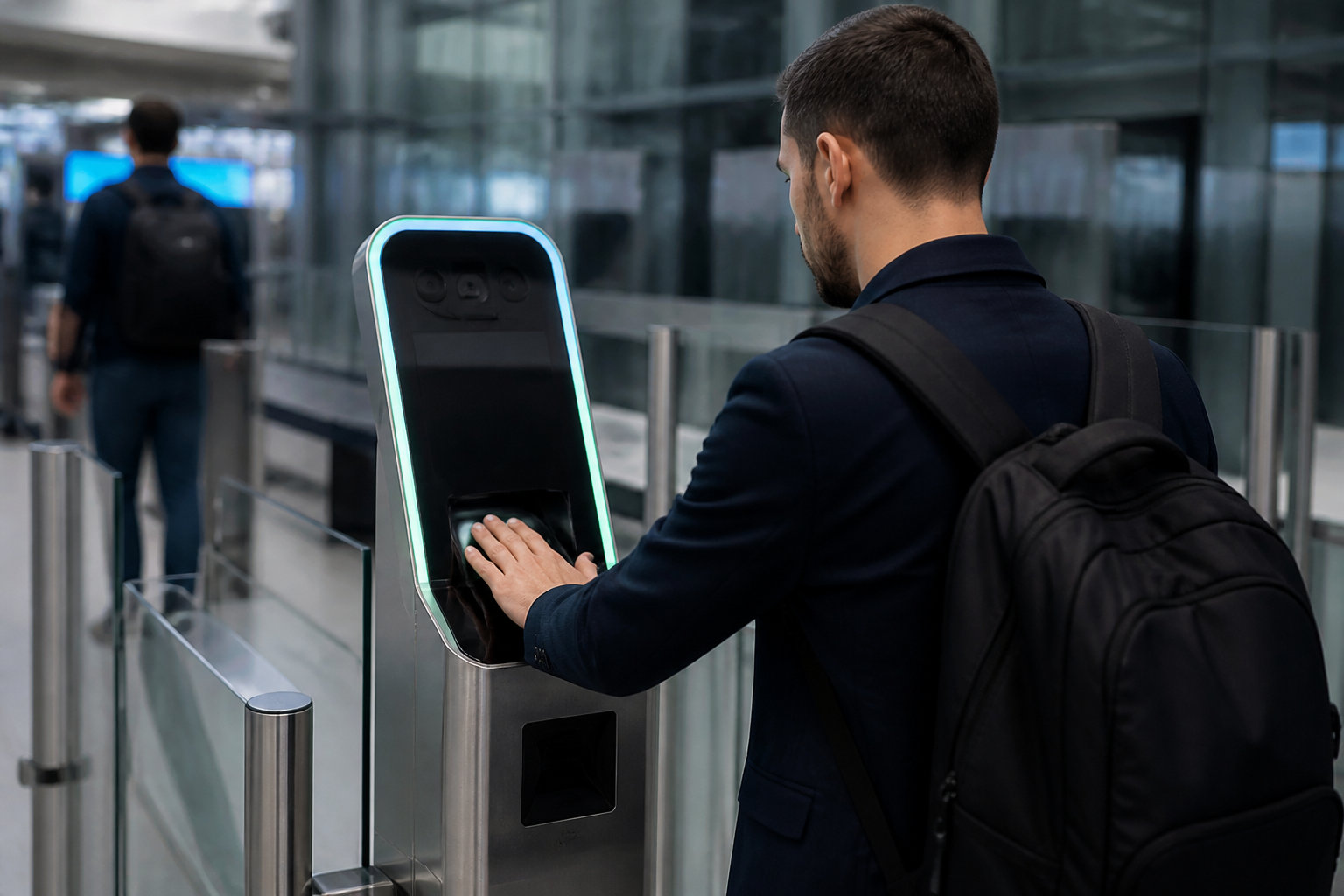
Fingerprints remain valid in the system for three years. After that, you must re-register at the border. This cycle ensures your biometric profile stays current within the Schengen database.
- EES: Active now
- ETIAS: Starting 2025
- Validity: 3 years
5 Customs Rules for Personal Belongings
Once you pass the biometric gates, you still need to clear the red or green customs channels. Navigating these final checkpoints requires precision to protect your seamless arrival in the Republic.
Cash Declarations and Prohibited Items
Respect the strict 10,000 euros threshold for liquid assets. You must declare amounts exceeding this limit. This includes checks, gold, and various foreign currencies.
Observe rigorous food restrictions. Meat and dairy products from non-EU countries are strictly banned. Customs will seize these items to prevent disease spread.
Understand your duty-free allowances. You can bring 200 cigarettes and one liter of spirits. Exceeding these limits requires paying French VAT and duties.
Consider enhancing your journey with luxury tours France for a curated experience. Experts handle the logistics. You simply enjoy the heritage.
Pet Health Certificates and IPATA Standards
Your companion requires meticulous documentation. Your dog or cat needs a microchip and a valid rabies shot. A bilingual health certificate must be signed by an official vet. This ensures a smooth entry.

Airlines enforce strict animal quotas. Most planes only allow a few animals in the cabin. Book your pet’s spot at the same time as yours.
Adhere to professional IPATA standards. Professional shippers follow these safety guidelines for long-haul flights. It is the gold standard for animal welfare during travel.
- Microchip ISO 11784
- Rabies vaccination
- EU Health Certificate
Following these steps guarantees your pet’s safety. Preparation is the hallmark of the sophisticated traveler.
Local Regulations and Daily Compliance
Your legal obligations don’t end at the airport; staying compliant within French borders is a daily task. Navigating the streets of Paris or the winding roads of Provence requires more than just a sense of adventure; it demands a precise understanding of Essential France travel requirements for international visitors to ensure your journey remains uninterrupted.
Driving Laws and Low-Emission Zones
Driving in France demands strict adherence to safety protocols. You must carry your original license and a reflective vest. A warning triangle is also mandatory in every vehicle. Police check for these items during routine stops.
The Crit’Air system governs urban air quality. Major cities like Paris require a pollution sticker. Order this online before you drive into low-emission zones. Fines for missing stickers can reach 68 euros for cars.
Labor movements often impact travel plans. Check the SNCF or RATP websites for daily updates. Strikes can disrupt local transport without much warning. Staying informed is the only way to maintain your schedule.
For personalized assistance with your luxury itinerary, feel free to contact us today. We handle the complexities while you enjoy the scenery.
Identity Checks and Public Conduct Rules
French law grants authorities broad powers regarding identification. Police are legally allowed to request ID at any time. Keep your passport or a certified copy on you. This avoids unnecessary trips to the station.
Public conduct is strictly regulated by national statutes. Face concealment in public spaces is illegal in France. Drug possession carries strict penalties, including immediate heavy fines of 500 euros for small amounts.
Accessing help is straightforward if you know the codes. Dial 112 for general emergencies anywhere in the country. Contact your local consulate if you lose your travel documents to begin the replacement process.
Always carry a digital scan of your passport in a secure cloud folder as a backup for identity checks.
Mastering these france travel requirements ensures your journey remains as seamless as it is sophisticated. Prioritize your three-month passport validity, secure mandatory health insurance, and validate your VLS-TS promptly to avoid administrative complications. Prepare your documentation now to embrace the timeless elegance of your upcoming French escape.
FAQ
What are the specific passport validity requirements for entering France?
To ensure a seamless arrival, international visitors must present a passport issued within the last ten years. Crucially, your document must remain valid for at least three months beyond your intended date of departure from the Schengen Area, though we recommend a six-month buffer to accommodate any spontaneous changes to your itinerary.
Please be aware that airlines maintain strict compliance protocols and may deny boarding if these temporal standards are not met. Furthermore, France does not recognize the 12-page U.S. emergency passport for visa-free entry; travelers holding this specific document risk immediate refusal at the border.
How does the 90/180-day rule affect my stay in the Schengen Zone?
Non-EU travelers are permitted to enjoy the splendors of France for a maximum of 90 days within any rolling 180-day period. This calculation is continuous, meaning every day spent in the Schengen zone, from the initial entry stamp to the final exit, counts toward this cumulative limit.
Exceeding this duration without a long-stay visa or residency permit can lead to significant complications, including deportation, administrative fines, or future entry bans. For those planning extended residencies, the VLS-TS visa must be validated online within three months of arrival to maintain legal status.
What financial proof must I present to border authorities upon arrival?
French regulations require visitors to demonstrate they possess sufficient means to support their lifestyle during their stay. The daily requirement is 65€ for those with prepaid hotel reservations, 120€ for those without a booking, and 32.50€ for guests staying in private homes with a validated certificate.
In addition to financial liquidity, you must carry proof of travel insurance providing a minimum of 30,000€ in medical and repatriation coverage. Border officers may also request to see your return ticket as evidence of your intent to depart the territory.
What is the Attestation d’Accueil and when is it mandatory?
The Attestation d’Accueil is a formal hosting certificate required for non-EU nationals staying in private residences for less than three months. Your host must obtain this document from their local Mairie for a fee of 30€, proving they can provide adequate and safe accommodations.
It is important to note that a simple handwritten invitation is legally insufficient for border control. Once validated by the Mayor, the original document must be sent to you so it can be presented alongside your passport during entry inspections.
How will the new biometric Entry/Exit System (EES) change my arrival?
The digital frontier has evolved with the Entry/Exit System (EES), which replaces traditional passport stamping with biometric registration. Upon your first entry, officers will capture facial images and fingerprints to track stays within the Schengen zone accurately and enhance security.
While EES manages physical tracking, the upcoming ETIAS authorization, scheduled for 2025, will serve as a mandatory pre-travel screening. These biometric records remain valid for three years, facilitating a more sophisticated and efficient crossing for frequent travelers.
What are the essential requirements for traveling to France with a pet?
Bringing a beloved companion requires meticulous preparation, including a microchip (ISO 11784) and a valid rabies vaccination. A bilingual health certificate, signed by an official veterinarian, is mandatory to ensure your pet meets French sanitary standards upon arrival.
We suggest consulting with IPATA professionals for long-haul logistics and contacting your airline well in advance. Most carriers enforce strict quotas on the number of animals permitted in the cabin, making early booking essential for a harmonious journey.
Are there specific local regulations I should follow while in France?
Beyond the border, compliance remains paramount; French law requires you to carry identity documents or certified copies at all times for potential police checks. When driving, ensure your vehicle is equipped with a reflective vest and a warning triangle, and verify if your destination requires a Crit’Air pollution sticker.
Public conduct is also regulated, notably regarding the prohibition of face concealment in public spaces. For your safety, familiarize yourself with 112, the universal emergency number, and maintain digital backups of all travel documents in a secure cloud environment.