
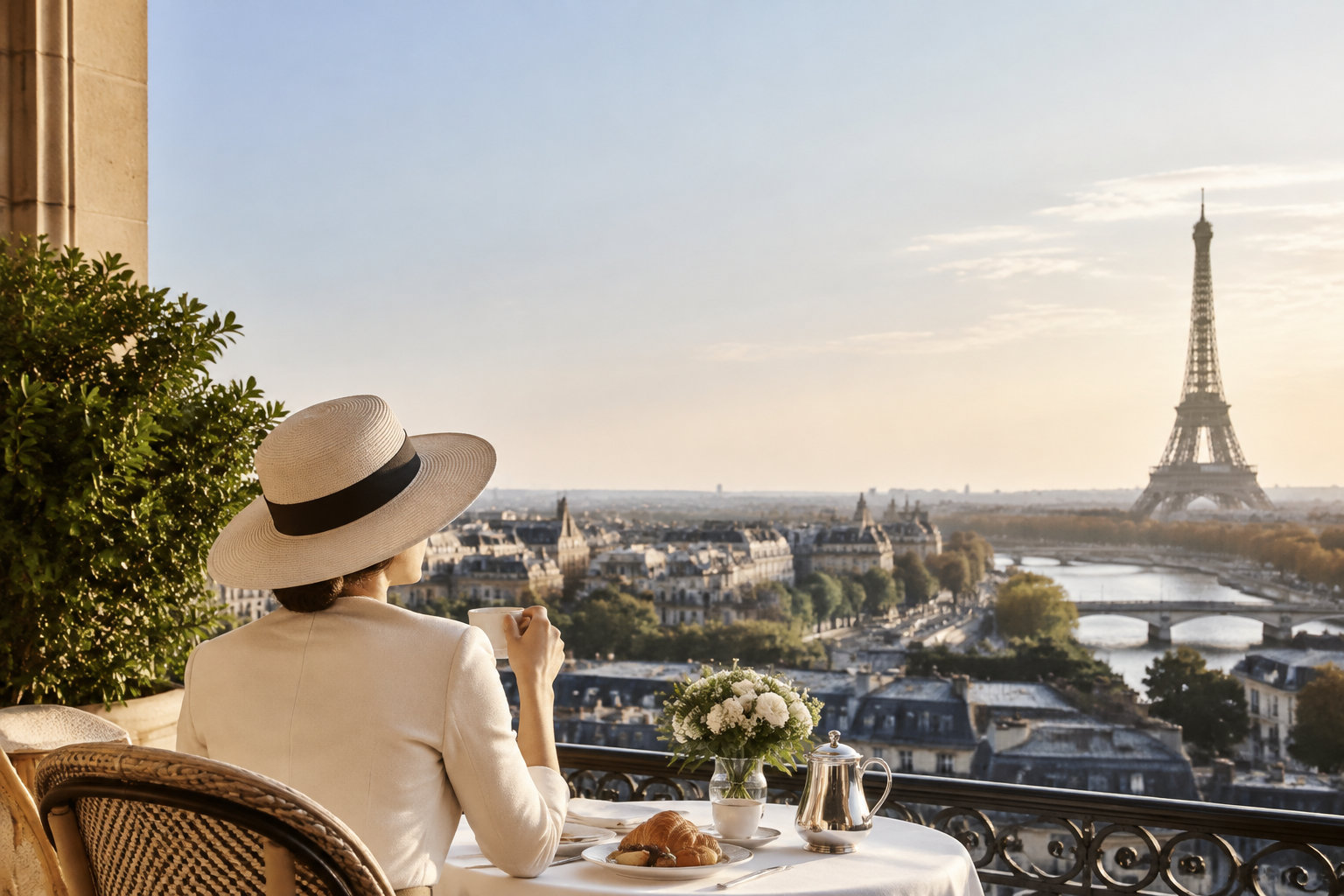
In France, the first words you speak often set the tone. Open every exchange with bonjour or bonsoir, then add Monsieur or Madame.
This guide covers the French etiquette for tourists that keeps doors open, from greetings to churches.
Say hello first, and use vous
In France, manners begin before you ask for anything: greet the other person and use vous with anyone you do not know or who is serving you.
Say hello during the day and good evening from the evening onward. Add Sir or Madam whenever you address a stranger, a hotel employee, a shopkeeper, or a guide. Skip this step and you have already been noticed. And not in a good way.
Formal or familiar address
Use the formal form of address with adults you do not know, professional contacts, older people, and anyone serving you. The familiar form is earned, not assumed. Wait for the other person to invite you to switch to tu.
Handshakes and la bise
For a first meeting, a professional introduction, or a formal welcome, a handshake is the safest choice. If your French counterpart leans in for la bise, follow their lead. Let your host set the rhythm rather than guessing; never force the gesture.
La bise is an air kiss with light contact at the cheek. It is never an embrace, and never a loud kiss. How many kisses are expected depends on the region. Let your host set the rhythm rather than guessing.
Let the restaurant set the pace
Paris rewards those who prepare. Book the tables you truly want before you arrive, check the cancellation policy, and treat your confirmed time as part of the experience, especially for a honeymoon or a private celebration.
| Situation | What to do | Typical rhythm |
|---|---|---|
| Fine dining | Reserve ahead, greet the host, and wait to be shown to your table. | Dinner usually begins around 7:30 p.m. and unfolds over several courses. |
| Traditional restaurant or bistro | Reserve when the address is popular, then wait near the entrance unless staff invite you to sit. | Lunch generally runs from noon to 2 p.m.; many kitchens pause afterward. |
| Café or casual brasserie | Ask where to sit if the arrangement is unclear. Choosing your own table is more common here. | In busy districts, brasseries may serve continuously between standard meal times. |
Patience is part of the meal
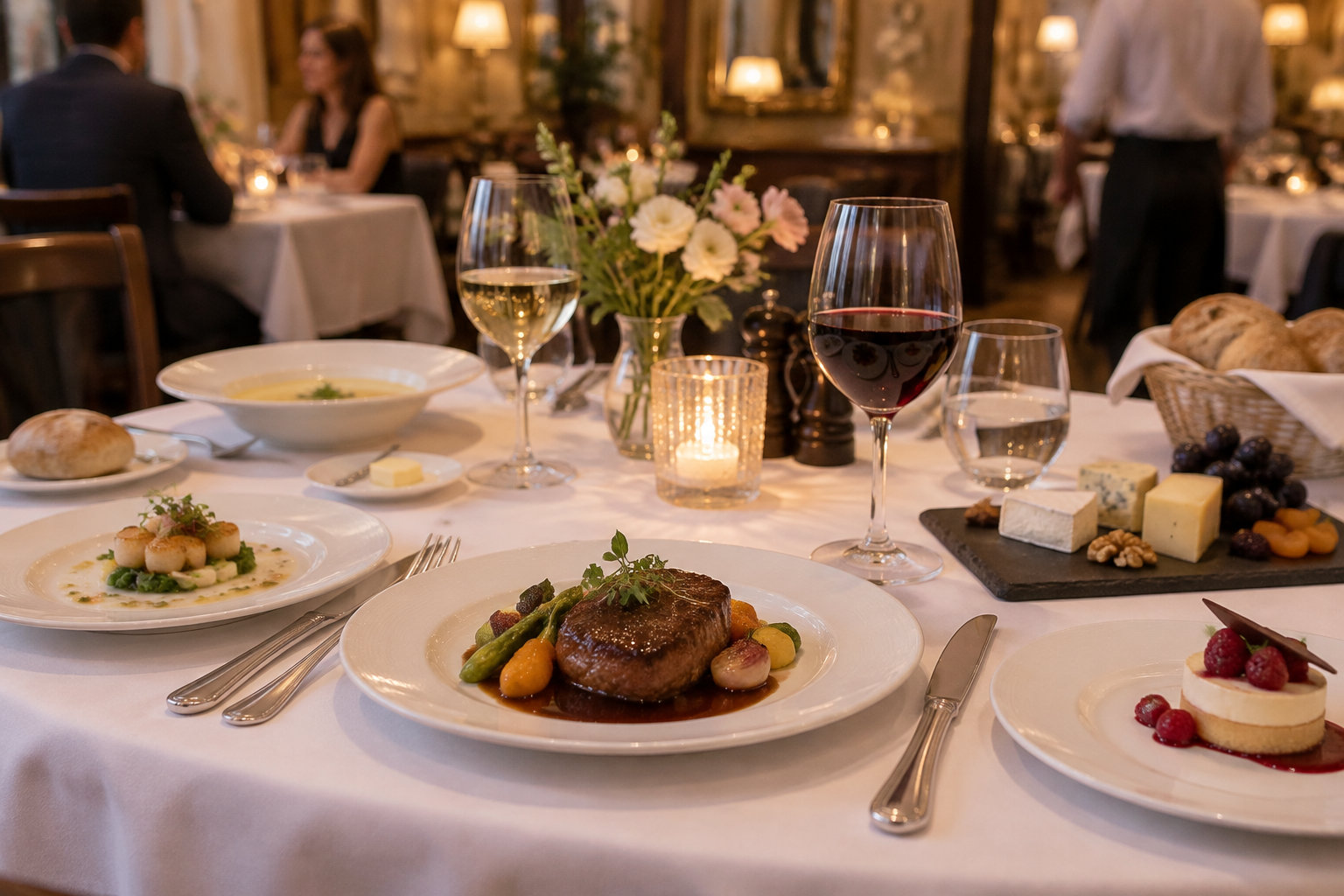
A French meal is not a transaction to be rushed. Lunch often outlasts a quick plate, and dinner can stretch through an aperitif, a starter, a main course, cheese, dessert, and a long conversation. Resist the urge to hurry it along.
Never snap your fingers or wave to get a server’s attention. Catch their eye and add “please” in a quiet voice.
The bill and tipping
Ask for the bill only when you are genuinely ready to leave. Say “the bill, please” and let the server bring it. An unprompted bill is not the usual signal that the table is finished.
Menus and bills usually show whether service is included. An extra tip stays optional. A few euros, or a modest rounding up, can mark excellent attention without importing American tipping habits.
Thank the team discreetly, with a quiet “thank you very much” or a small amount left with the bill. In an elegant restaurant, even a generous gesture should feel deliberate, never automatic.
Menus and bills usually show whether service is included, but payment habits vary. Ask before ordering if you need to pay by card, split the bill, or settle at the counter rather than at the table.
For a polished request, say, “Hello, I would like to reserve a table for two, please.” Give the date, the time, the number of guests, and a reachable telephone number, then arrive on time.
Dress with intention, especially for sacred spaces
French style does not ask for theatrical formality. It asks for intention. Clean, well-cut clothing, discreet shoes, and a jacket or structured layer take you from a private museum visit to an evening table with far more authority than sportswear.
Smart-casual suits most bistros and brasseries. Wear tailored trousers or dark, well-fitted jeans, a fitted shirt or blouse, and polished shoes or refined trainers. Athletic wear, flip-flops, baseball caps, and visibly worn garments undermine the impression you came to make.
A church is not simply another monument, so the dress code follows three rules:
- Shoulders, torso, stomach, and thighs covered
- No transparent or tight-fitting clothing
- Hats, caps, and beanies removed indoors
At Notre-Dame de Paris, cover your shoulders, torso, stomach, and thighs, and remove your hat indoors.
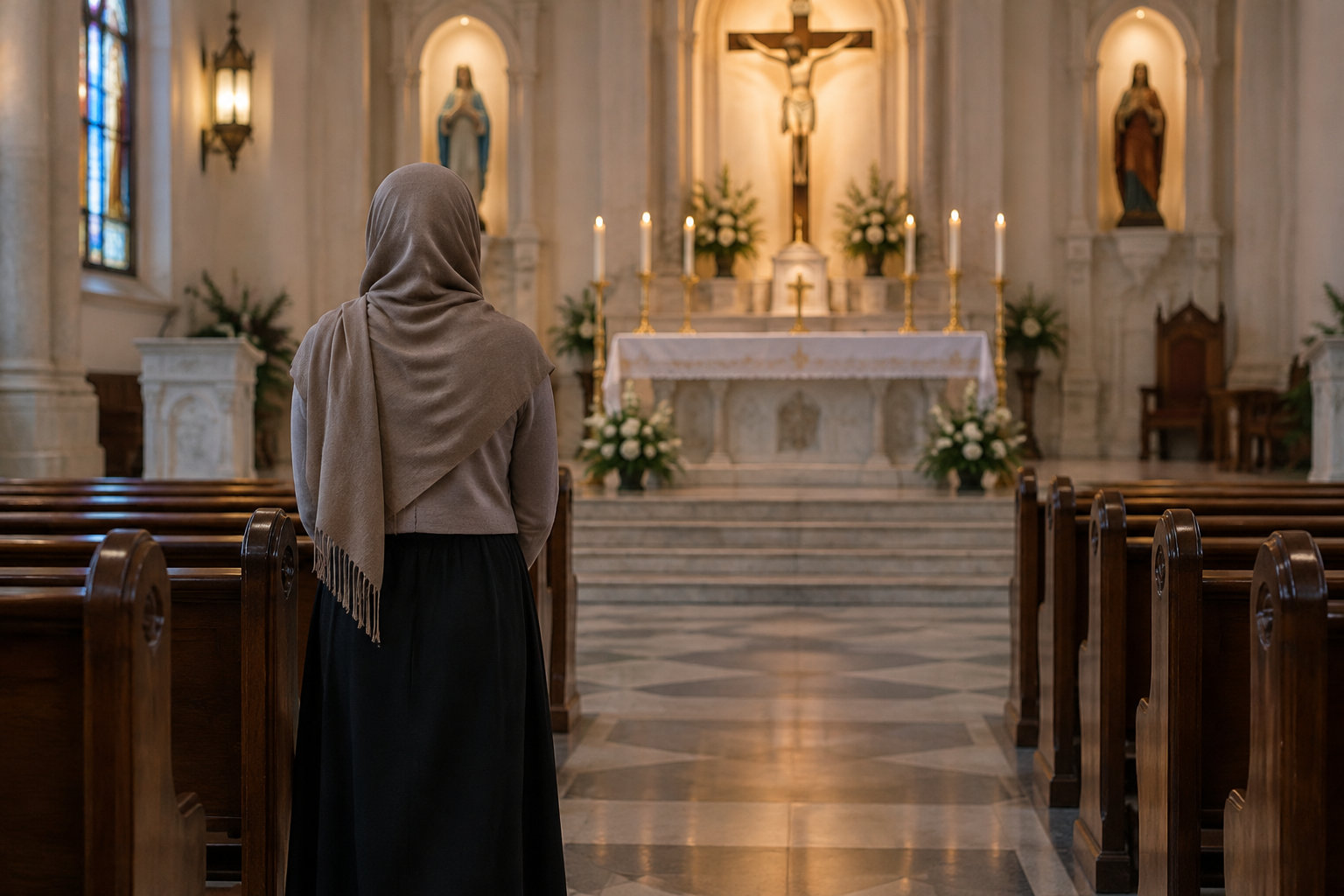
Notre-Dame de Paris welcomes visitors free of charge during opening hours. It remains an active Catholic place of worship. Enter quietly, keep the atmosphere contemplative, and never treat the nave as a casual photo backdrop.
Inside the cathedral, the following are not permitted or not suitable:
- Phone calls
- Food and drinks
- Large luggage and suitcases
Security checks mean a light bag makes the visit far smoother.
Before you step inside
- Shoulders, torso, stomach, and thighs covered
- Hat, cap, or beanie removed
- Phone calls postponed until you are outside
- Food and drinks left behind
- Bag light enough to clear security without delay
Non-flash photography is allowed except in specifically restricted areas. Selfie sticks are prohibited. Follow posted signs and staff instructions, especially near chapels, prayer areas, and roped-off sections.
Keep shared spaces calm and clear
Discretion is the most portable form of French etiquette. Lower your voice in hotel corridors, museums, churches and restaurants. Switch off speakerphone on public transport too.
In a church, never continue a conversation while others pray. Do not stop in a narrow aisle or pose in front of an altar. Move slowly, keep prayer areas clear and let worshippers pass.
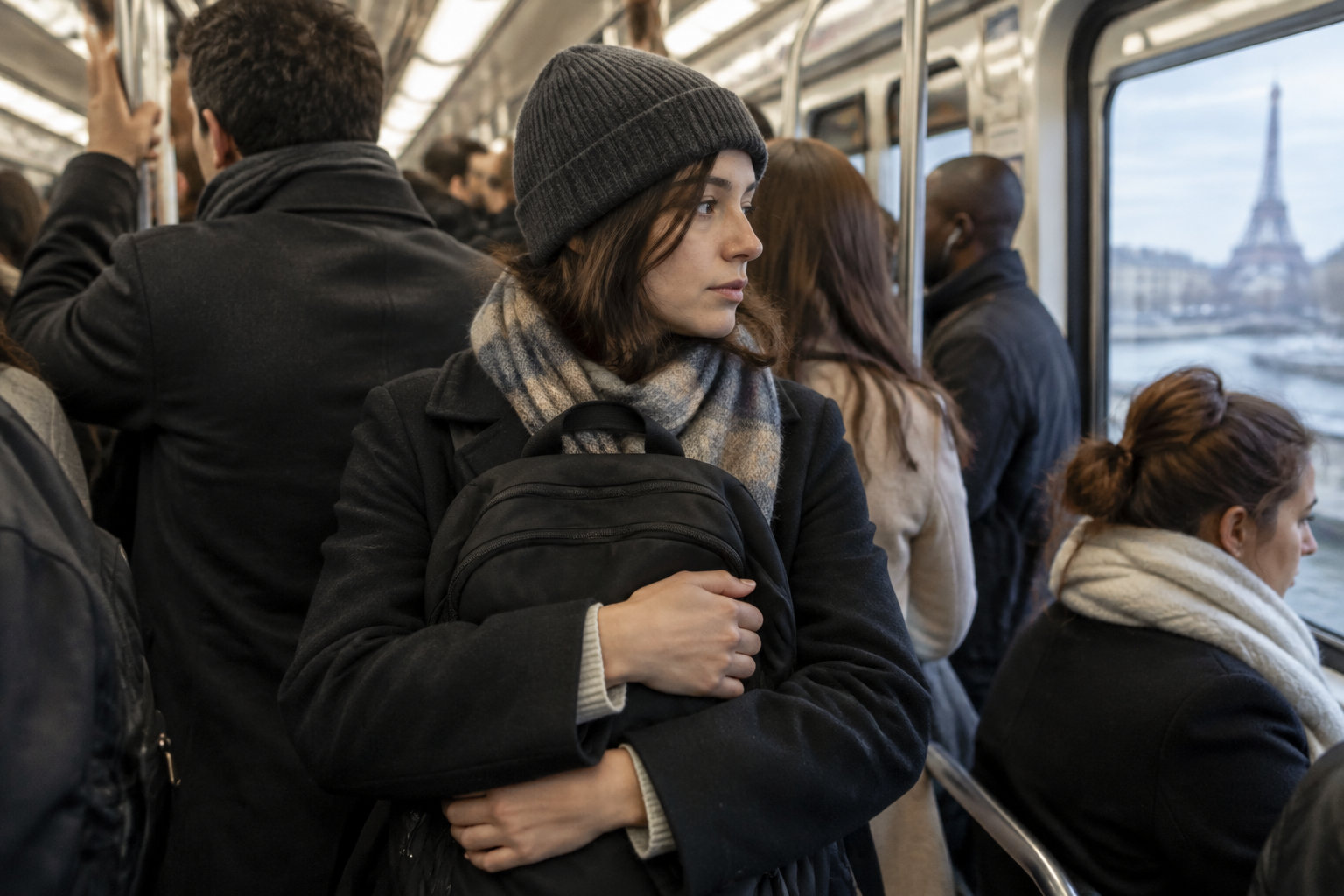
On the Paris Métro and other RATP services, take your backpack off in crowded carriages. Hold it at your side or between your feet. This protects the space around you and makes life harder for pickpockets.
- Lower your voice and switch off speakerphone before entering a hotel corridor, museum, church or restaurant
- Take your backpack off in crowded carriages and keep it at your side or between your feet
- Raise the strapontin only when the carriage fills, and offer your seat where it is needed
- Let passengers off first, then step in without holding the doors for a late companion
- Find the end of the queue and check which line serves which purpose
Fold-down seats, known as strapontins, are for quiet moments. Raise them when the carriage fills. Offer your seat to anyone elderly, pregnant, disabled, injured or travelling with a young child.
Let passengers off before you board. Stand to one side of the doors and wait for the carriage to empty. Then step in without blocking the flow.
A queue may look informal, but it still has an order. Notice who arrived before you and join at the end. If you are unsure whether several lines serve different purposes, ask which line is for your destination.
A few precise phrases open doors
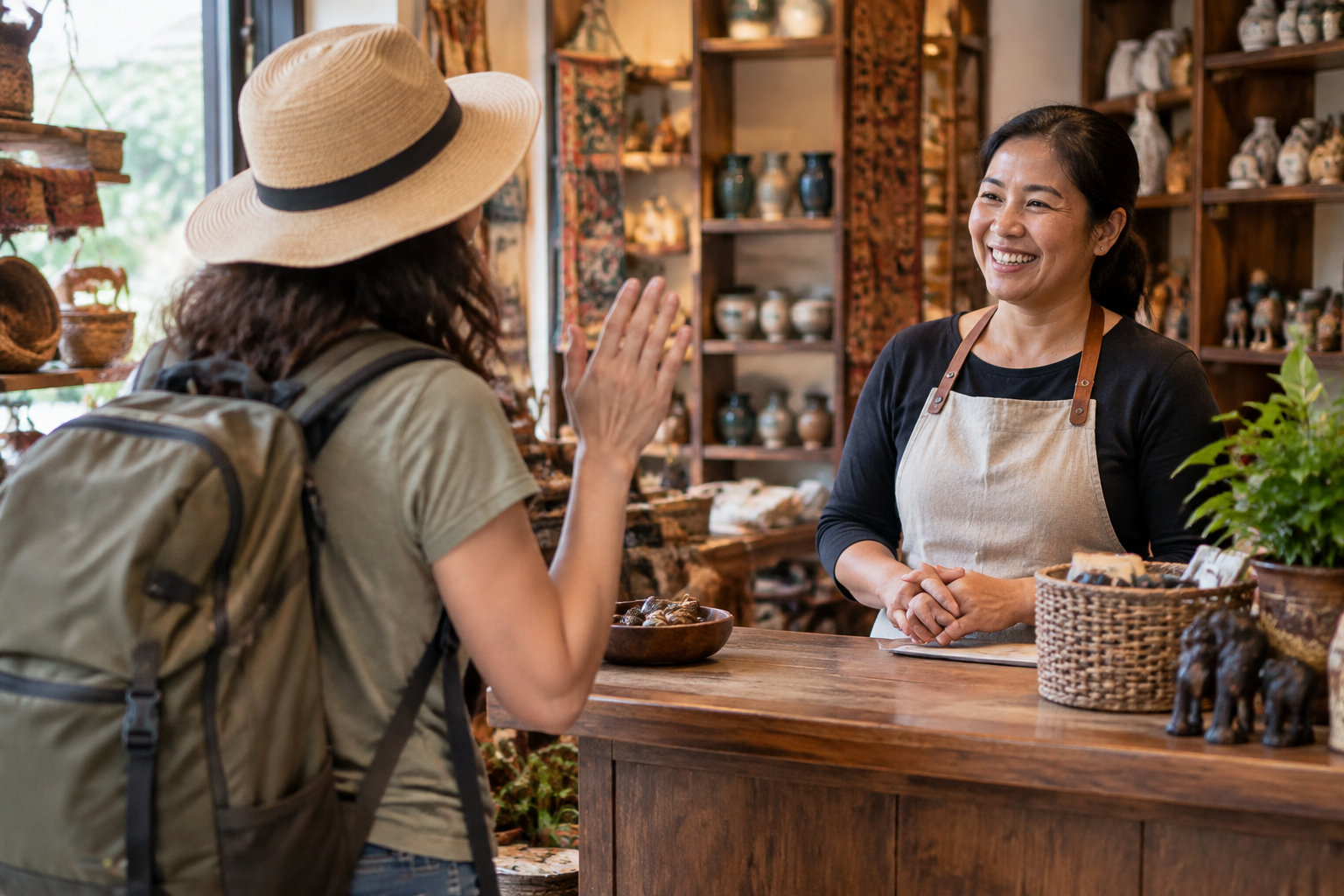
A few French phrases will open doors that fluent English cannot. Start with bonjour, then ask if the person speaks English before you make your request.
Two phrases do most of the work. “Hello, do you speak English?” sounds far more courteous than opening in English.
“Excuse me” is a useful phrase. Use it to get attention or to pass.
Unsure where to pay? Ask, “Do we pay here or at the counter?” This saves you from standing around or leaving before staff explain the process.
When someone thanks you, “you’re welcome” is polite and widely understood in everyday situations. With hotel staff, a guide, or a restaurant team, “my pleasure” sounds more respectful.
Etiquette opens doors, but only for guests who arrive prepared. Before leaving your hotel, check that your outfit suits every sacred space on your route, pack a light bag, and leave the selfie stick behind. Those decisions tell every host and guard that you came to belong.
FAQ
What does 5 to 7 mean in France?
The 5 to 7 window runs from 5 p.m. to 7 p.m. and is a time for drinks and light bites before a later meal.
It means drinks and light bites before a later meal, not a dress or greeting requirement.
What does the 3-3-3 rule for clothes mean?
The 3-3-3 rule is a packing method built on three tops, three bottoms, and three pairs of shoes.
Choose pieces that coordinate, then add weather-appropriate layers and any formal item your restaurant or event requires.
Is “you’re welcome” polite?
Yes, “you’re welcome” is polite and widely understood in everyday situations, especially after a small favour.
With hotel staff, a guide, or a restaurant team, “my pleasure” sounds more respectful.
Is it acceptable to use a phone during a meal?
Keep the phone off the table during an intimate or formal meal.
Never use speakerphone in a restaurant. For an urgent call, excuse yourself and step away briefly.