
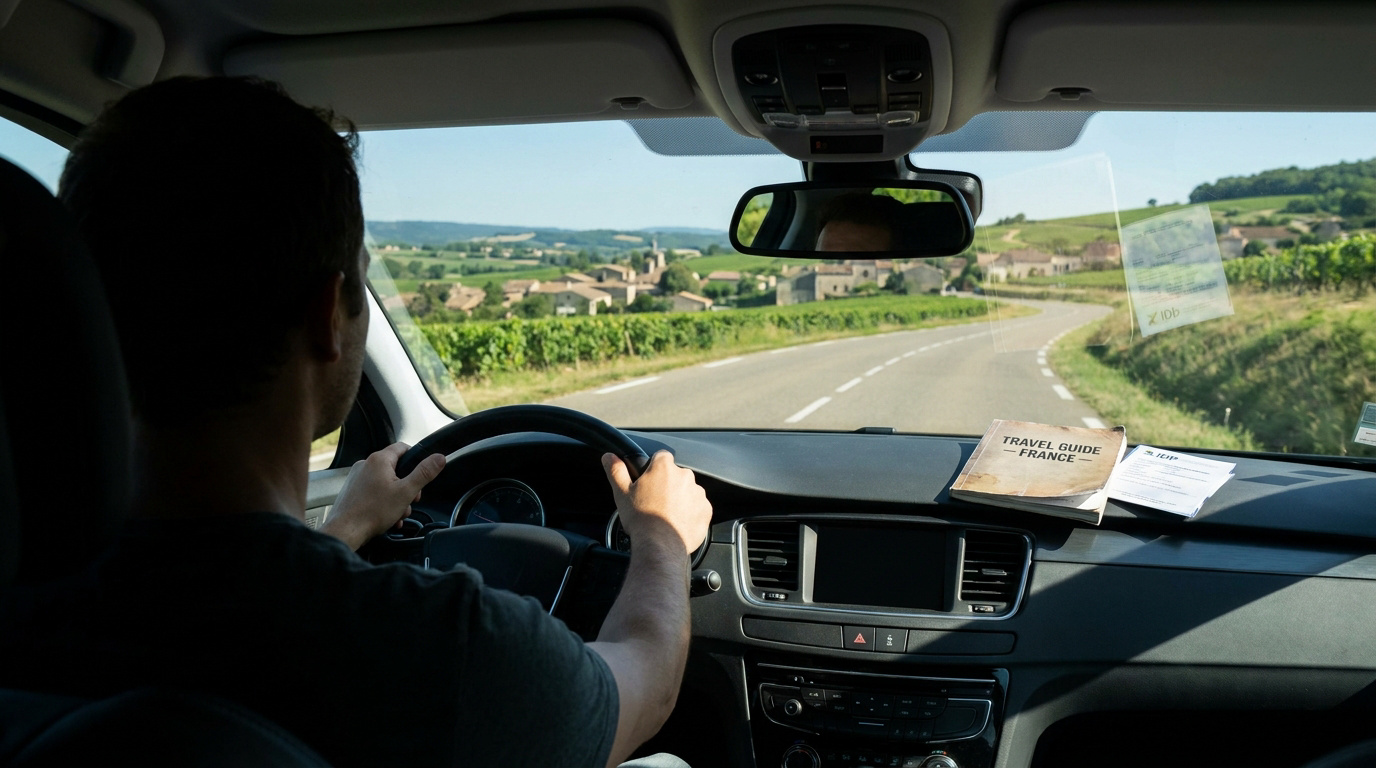
Exploring the pastoral charm of the French countryside requires more than just a sense of adventure; it demands strict adherence to local regulations. While your valid US state license grants you the freedom to navigate these historic routes for up to 90 days, the law mandates that you also carry an International Driving Permit as an official translation of your credentials.
A simple roadside check can quickly turn into a stressful encounter or a 135-euro fine if your documentation is incomplete. We have curated this essential guide to ensure your journey remains seamless, outlining the mandatory safety equipment and the specific legal requirements for driving in france with us license so you can focus on the road ahead.
- Driving in France With a US License: The Short-Term Reality
- 4 Mandatory Items for Your French Glovebox
- Long-Term Residency and the Permit Exchange Path
- How Do You Master the French Road Etiquette?
Driving in France With a US License: The Short-Term Reality
Tourists can drive in France for 90 days using a valid US state license. An International Driving Permit (IDP) is legally required as a translation. Carrying physical proof of insurance and registration is non-negotiable for all American drivers.
The last sentence mentions the 90-day limit, which leads directly into the specifics of the tourist window.
The 90-Day Tourist Window
Short-term visitors are legally cleared to drive. Your US state license works for stays under three months. Original plastic cards are mandatory, not digital copies.
This right applies only to non-commercial vehicles. You cannot drive heavy trucks or buses without professional European certifications.
Ensure your license photo is clear and current. French police will reject damaged or expired documents immediately during roadside checks.
Keep your passport handy. It proves your entry date and tourist status.
Why the International Driving Permit Matters
The IDP serves as an official translation of your American credentials. It does not replace your license. You must carry both documents together at all times while behind the wheel.
Driving without an International Driving Permit in France can lead to immediate fines of 135 euros and potential vehicle impoundment during police inspections.
Apply for your permit through AAA before leaving the United States. The process is fast and inexpensive. It saves massive headaches if you deal with local Gendarmerie officials.
4 Mandatory Items for Your French Glovebox
Legal status is only half the battle; you also need specific gear inside the car to stay compliant.
Identification and Vehicle Paperwork
You need the original registration document, known as the Carte Grise. Rental agencies usually provide a copy. Check that it is in the glovebox before you drive away.
Proof of insurance is strictly required for every vehicle on French roads. Most rentals include this automatically. Explore our custom offers for seamless premium travel arrangements.
Keep your US passport with your driving documents. Officials need to verify your identity against the car’s paperwork. Never leave these originals in the car when you are parked.
Safety Equipment and Mandatory Kits
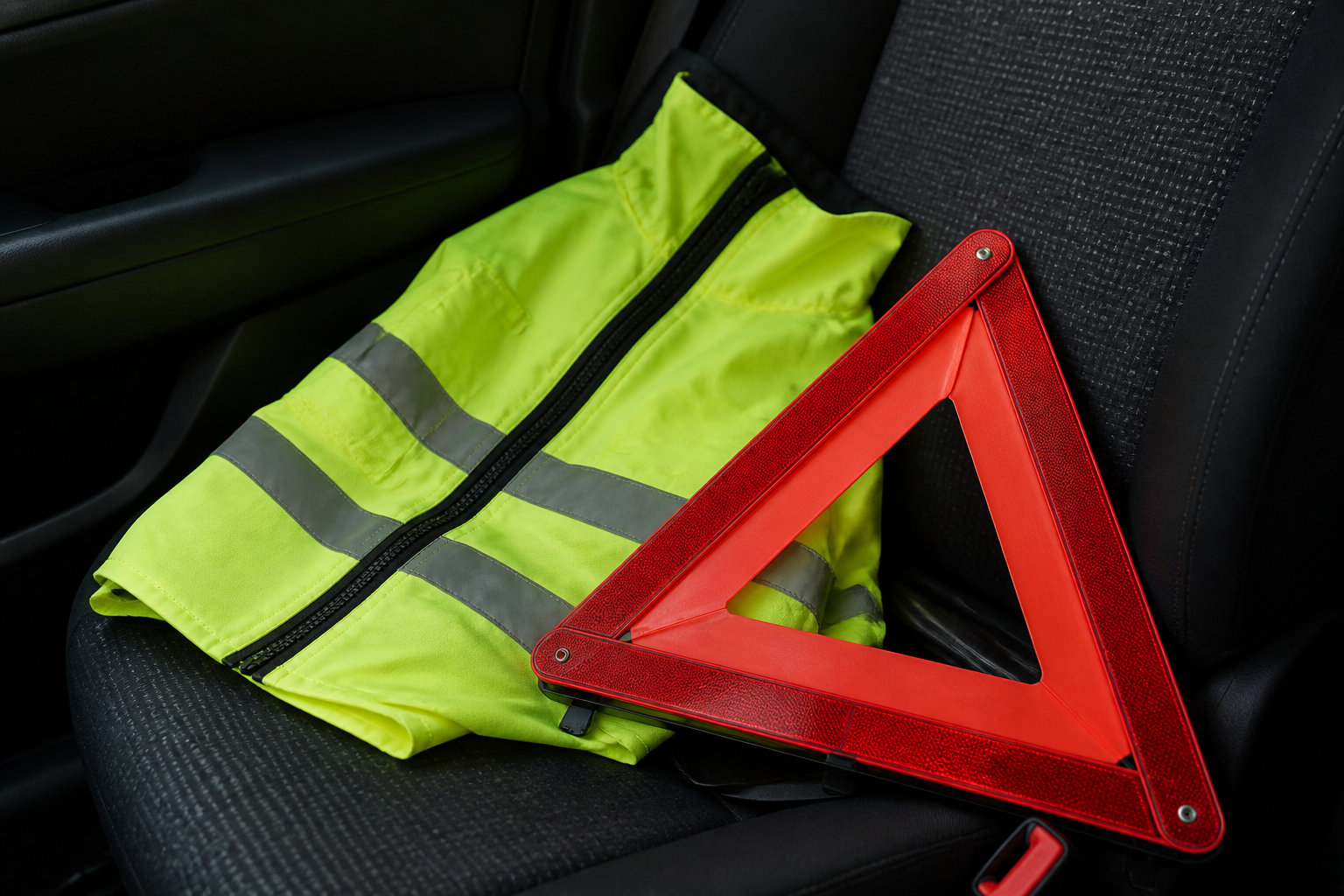
A high-visibility reflective safety jacket must be kept inside the passenger cabin. It cannot be in the trunk. You must be able to put it on before exiting a broken-down vehicle. This is a safety law requirement.
- Reflective jacket (neon yellow or orange)
- Warning triangle for road placement
- Spare bulbs for headlights
- Breathalyzer kit (recommended but not strictly fined anymore)
Place the warning triangle 30 meters behind the car if you stop on the shoulder. It warns oncoming traffic effectively.
Long-Term Residency and the Permit Exchange Path
If your stay extends beyond a simple vacation, the rules for your American license change drastically.
The One-Year Grace Period for Newcomers
New residents can use their US license for exactly one year. This clock starts the day your residency permit becomes valid. Do not wait until month eleven to act.
Navigating these transitions requires precision, much like planning France custom tours DMC. Expert guidance ensures every legal detail remains perfectly aligned.
Exchanged permits fall under a probationary point system. You start with six points instead of twelve. Any infraction carries heavy weight.
Drive carefully during this first year. Losing points early can lead to a total license suspension. It is a strict French policy.
Exchanging Your US License for a French Permit
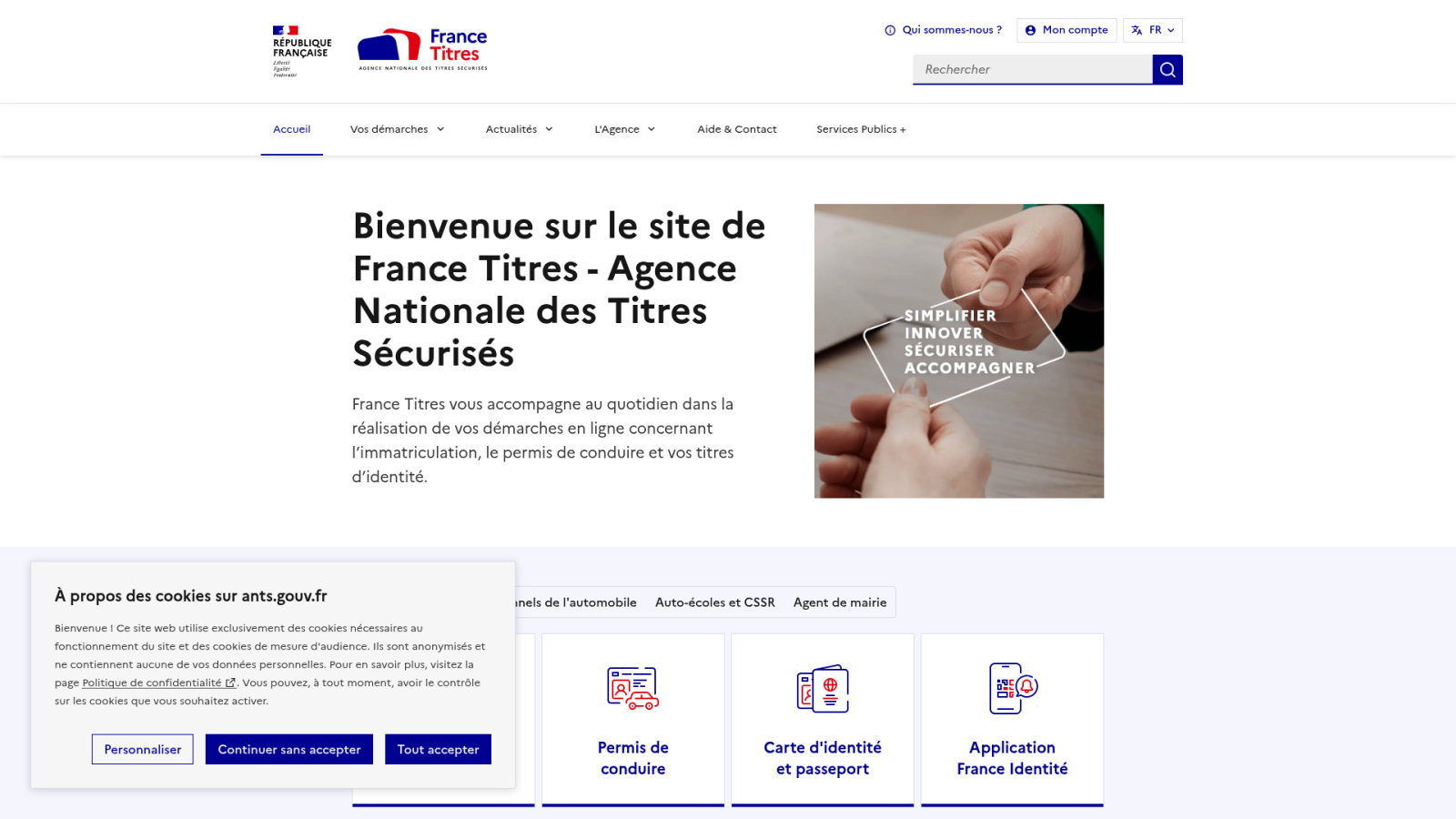
Exchange eligibility depends on your home state. Some states like Pennsylvania or Florida have reciprocal agreements. Others do not. Check the official ANTS website for the full list.
| State Agreement | Requirement | Process | Wait Time |
|---|---|---|---|
| Reciprocal States | Simple exchange | Online Application | 6-12 months |
| Non-Reciprocal States | Full Exam | Theory & Practical | Varies |
| Document Translation | Certified translation needed | Sworn Translator | 1-2 weeks |
| Final Approval | Physical License Surrender | Final Verification | Processing completion |
If your state lacks an agreement, you must pass the French driving test. This includes a difficult theory exam and a practical road test. Start studying the Code de la Route early.
How Do You Master the French Road Etiquette?
Having the right papers is one thing, but surviving the unique flow of French traffic requires specific local knowledge.
Rental Policies and Age Requirements
Most rental companies require drivers to be at least 21 years old. Drivers under 25 often face daily surcharges. Use a major credit card for the security deposit.

Manual cars are standard. Automatics cost more and require advance booking.
Check the fuel type. Putting gasoline in a diesel engine is a costly mistake.
Always secure your automatic transmission weeks ahead of your arrival. Verify the fuel flap twice; diesel is common but gasoline is never compatible.
Managing City Zones and Crit’Air Vignettes
Major cities like Paris require a Crit’Air sticker. This vignette classifies your vehicle based on emissions. Driving without one in restricted zones leads to automatic fines.
Enhance your journey with private tours in Paris to avoid urban congestion. Pay for parking at street kiosks or via mobile apps.
Rural Etiquette and the Right-of-Way Rule
The priorité à droite rule is vital. Vehicles entering from the right have the right of way at unmarked intersections.
- Yield to the right in villages
- Use credit cards for tolls
- Pull over on narrow roads
- Avoid the horn in towns
Country roads are often narrow and winding. Stay alert for tractors and cyclists. French drivers move fast but generally follow lane discipline.
This right-of-way rule dictates that vehicles entering from the right at unmarked intersections have absolute priority, even on rural lanes.
Mastering the art of driving in France with us license credentials requires a valid plastic card, an International Driving Permit, and mandatory safety gear. Secure your paperwork and embrace the right-of-way rules to ensure a seamless journey through breathtaking landscapes. The open roads of Gaul await your arrival.
FAQ
Is it possible to explore French roads using my American driver’s license?
Indeed, short-term travelers may navigate the scenic routes of France using a valid US state license for a period not exceeding 90 days. To ensure a seamless experience, you must carry the original physical card, as digital reproductions or photocopies are strictly disregarded by local authorities.
While your domestic credentials grant you passage, they must be accompanied by an International Driving Permit (IDP) or a certified French translation. This document acts as an essential bridge of understanding between your American records and the requirements of the French Gendarmerie.
What specific documentation should I keep within my vehicle?
Compliance requires a curated collection of paperwork, including your original passport, the vehicle’s registration, often referred to as the Carte Grise, and definitive proof of insurance. These elements form the foundation of legal driving and must be readily available during any roadside inspection.
Beyond paperwork, French law mandates the presence of specific safety gear within the cabin. A high-visibility reflective jacket must be reachable from your seat, and a warning triangle must be stowed in the trunk to ensure your safety and the safety of others in the event of an unforeseen stop.
How does the transition to a French permit work for long-term residents?
For those who choose to call France home, your American license remains valid for exactly one year from the start of your residency. This grace period offers a window of opportunity to initiate an exchange for a local permit, a process that preserves your mobility as you integrate into French life.
The ease of this exchange is dictated by reciprocal agreements between France and your specific home state. While residents from states like Illinois or Pennsylvania may enjoy a direct administrative transfer, others may be required to demonstrate their expertise by passing the formal French driving examinations.
Are there unique requirements for renting a car in France?
Securing a refined vehicle for your journey typically requires the driver to be at least 21 years of age, though those under 25 may encounter specific daily surcharges. It is vital to present a major credit card for the security deposit, as many agencies do not accept debit cards for this purpose.
We recommend confirming the transmission type and fuel requirements before departing the rental terminal. Manual vehicles are the standard across the continent, and ensuring you have selected the correct fuel, whether gasoline or diesel, is essential to maintaining the integrity of your automotive experience.
What local driving customs should I be aware of?
Mastering the French art of driving requires an understanding of the priorité à droite, a traditional rule where vehicles entering from the right at unmarked intersections hold the right of way. This nuance, combined with the necessity of a Crit’Air vignette for city access, ensures a sophisticated and respectful presence on the road.
When navigating the charming, narrow lanes of rural villages, a gentle pace and quiet presence are expected. By yielding to local traffic and observing lane discipline on the motorways, you embrace a style of travel that is both safe and elegantly aligned with local etiquette.