
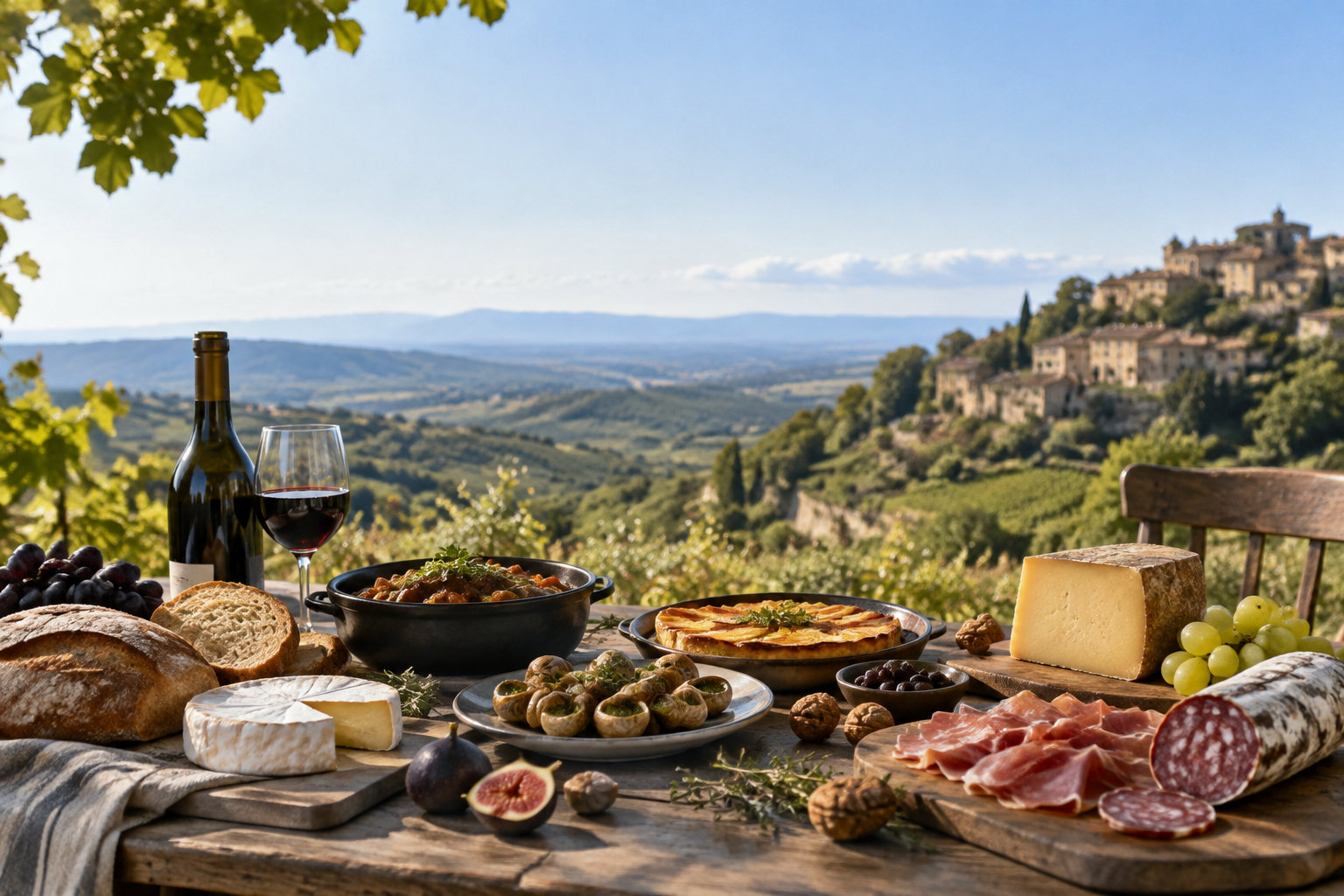
Order the local dish, and you taste a different France. Most tourist menus blur those differences into one generic plate.
This guide shows which regional dishes are worth the detour, and which ones exist mainly for the photo.
Traditional French food by region follows the land
France does not cook one national cuisine, and you should accept that first. Butter rules in Normandy and Brittany. Olive oil takes over in Provence. Duck fat enriches the Southwest. Wine, beer, cream and slow cooking mark the regions in between.
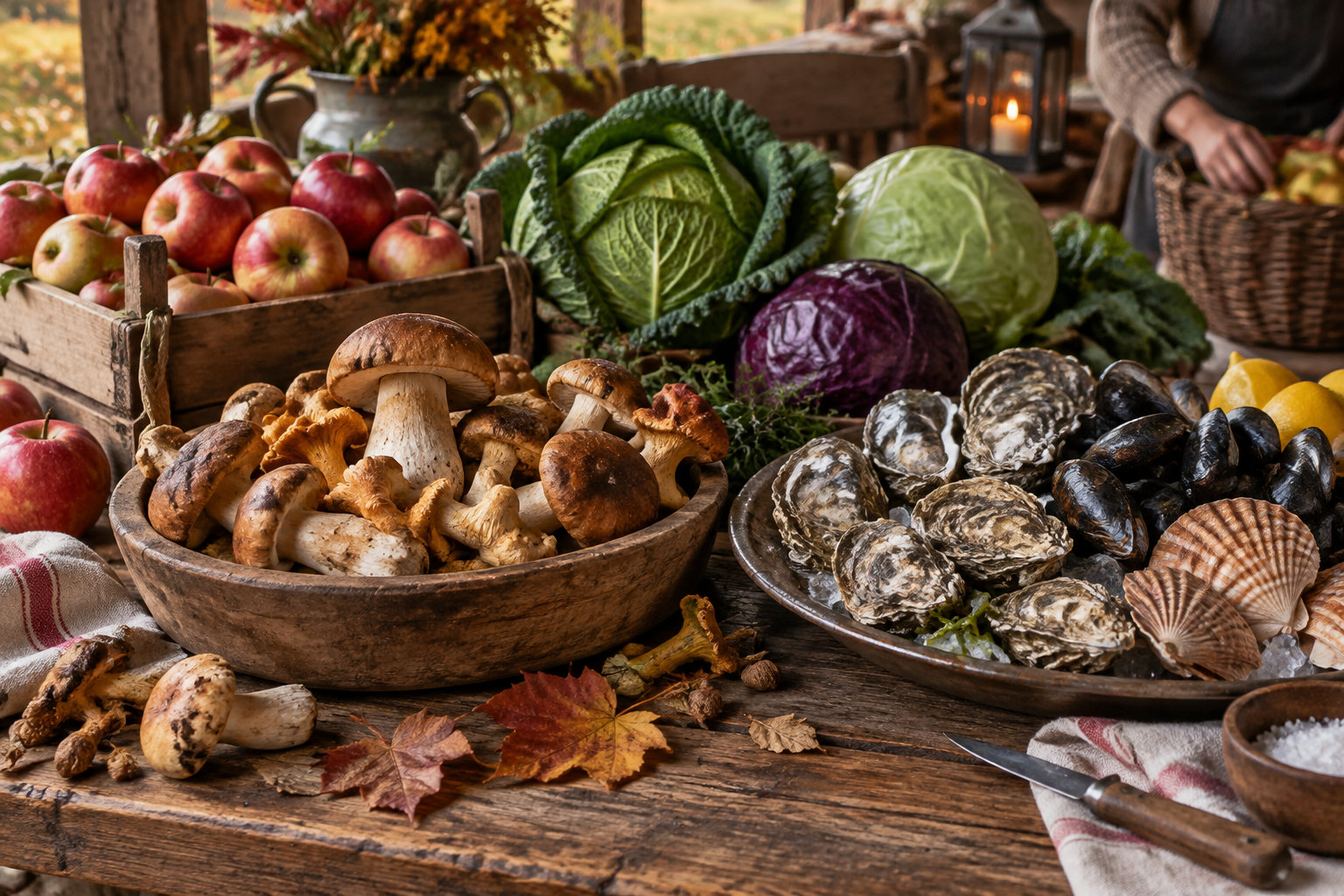
The seasons still decide what ends up on the plate.
- Autumn brings mushrooms, game, apples, cabbages and shellfish.
- Winter hands you braises, cassoulet, choucroute and mountain gratins.
- Spring opens with fresh brocciu and young vegetables.
Protected names tell you whether a product is regional or a tourist imitation.
Three labels, three levels of protection
-
AOP
AOP protects the full link between a product and the place where it is made.
-
IGP
IGP protects a product whose quality or reputation ties it to a defined territory.
-
STG
STG protects a traditional recipe or method.
Use the official French quality map to plan a food route. It shows protected cheeses, meats, fruits, wines and other regional products.
The label is not decoration. It tells you where the origin, method and ingredients should come from.
Northern French food mixes beer, seafood and dairy
The north cooks with sturdy ingredients and Flemish instincts. Beer often takes the place of wine, and sometimes sits right beside it, as the best Michelin star restaurants on the French Riviera remind you in a different setting. Dairy softens the strong flavours. Stews turn cheap cuts of meat, fish and vegetables into generous plates.
Beer gives Lille its savoury backbone
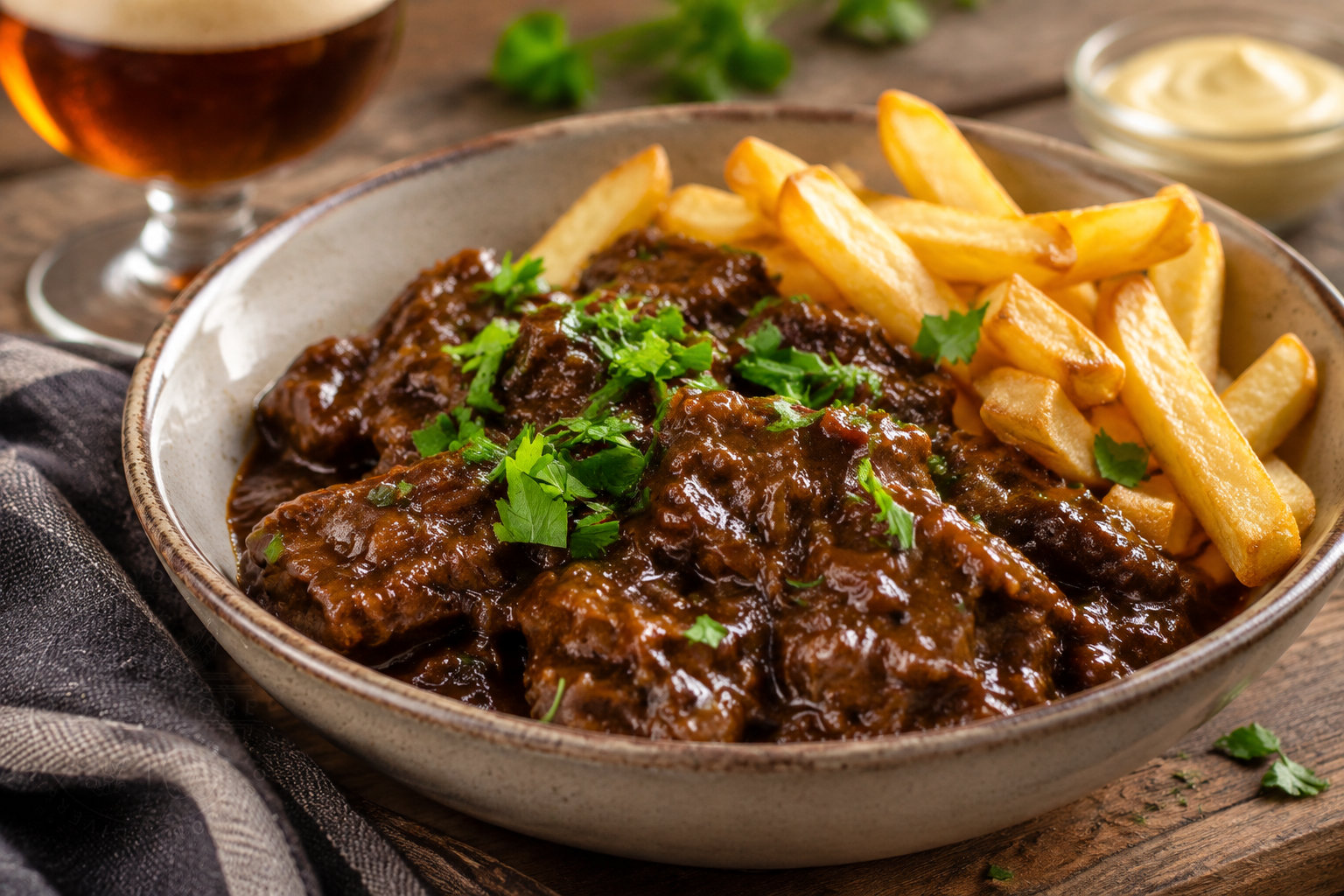
In Lille, order carbonade flamande. It is beef cooked slowly in beer with brown sugar, and it comes with a local brew. The sauce should taste dark and malty, with a faint sweetness. If it tastes like an ordinary beef stew, you were served the wrong dish.
The region’s cooking stays close to the pot. Three classics show how far the stew tradition reaches.
Three pot dishes of the north
-
Waterzoï
Fish combined with a creamy broth, the dish is built for a spoon.
-
Hochepot
Meats and vegetables cooked together in one pot.
-
Eel
Eel served with butter, cream and fresh herbs.
For a direct taste of Lille, go to Wazemmes Market on a Tuesday, Thursday or Sunday. The covered Sébastopol market is the other practical stop. There you will find Maroilles tarts, carbonade flamande, regional beer and seasonal produce.
Normandy joins seafood to cream and apples
Start with moules marinières, oysters, scallops and fish in the coastal towns. Then head inland for Camembert, Pont-l’Évêque, Livarot and Neufchâtel. Each cheese has its own texture and strength. A mixed tasting tells you far more than a single famous name.
Apples control the sweet, liquid side of Normandy. Eat them in tarts, compote or dessert. Then taste cider and Calvados, the apple brandy that gives the region its sharpest finish.
Autumn is the moment to hit Normandy’s seafood markets. Winkles, mussels, clams and scallops are at their best. Apples go into juice, cider and pastries.
Brittany pairs buckwheat galettes with Atlantic seafood
Brittany’s food comes from two hard landscapes. The soil is poor, which suits buckwheat. The long Atlantic coast supplies fish, oysters, mussels, clams, lobster and scallops.
Galettes carry buckwheat and local fillings
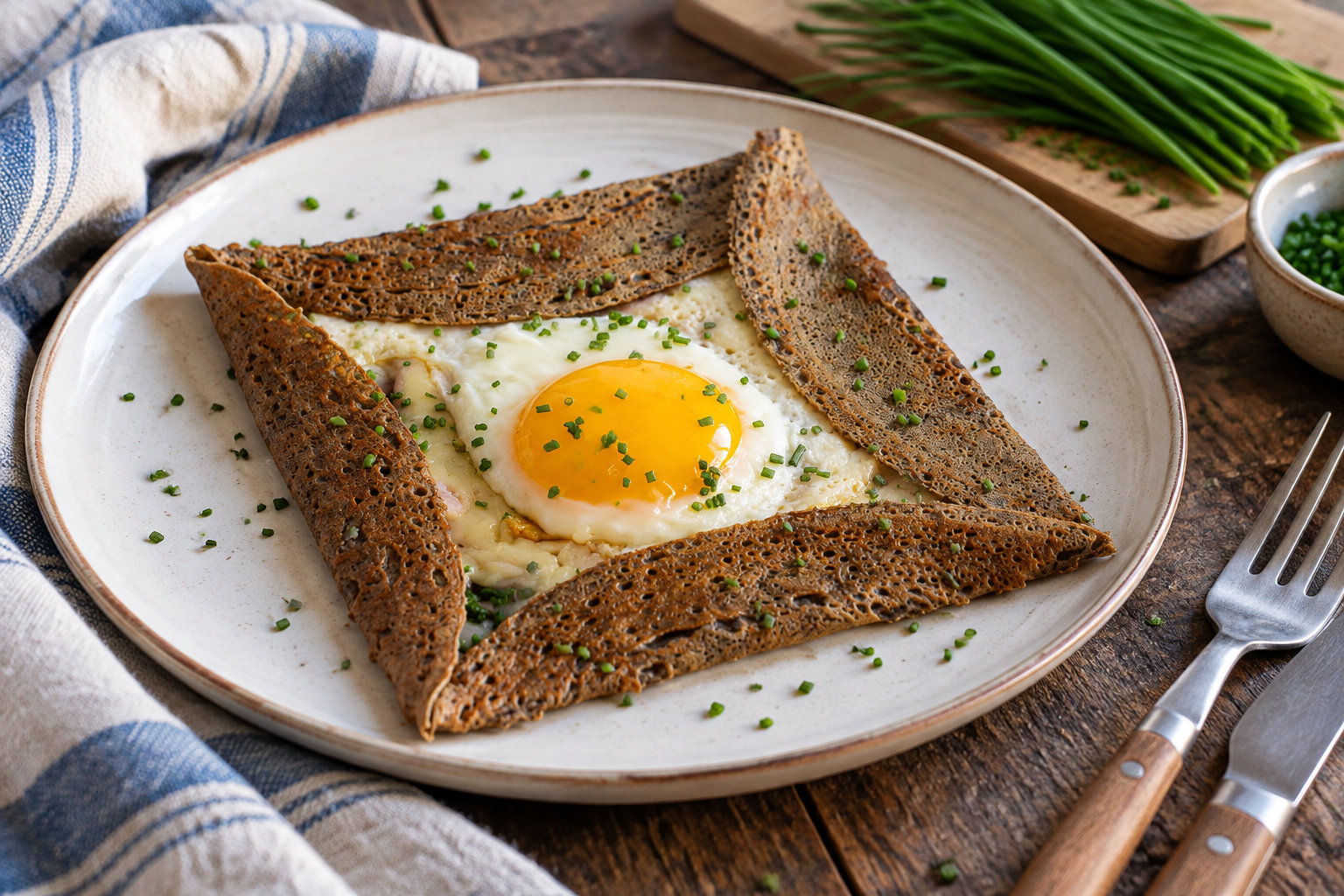
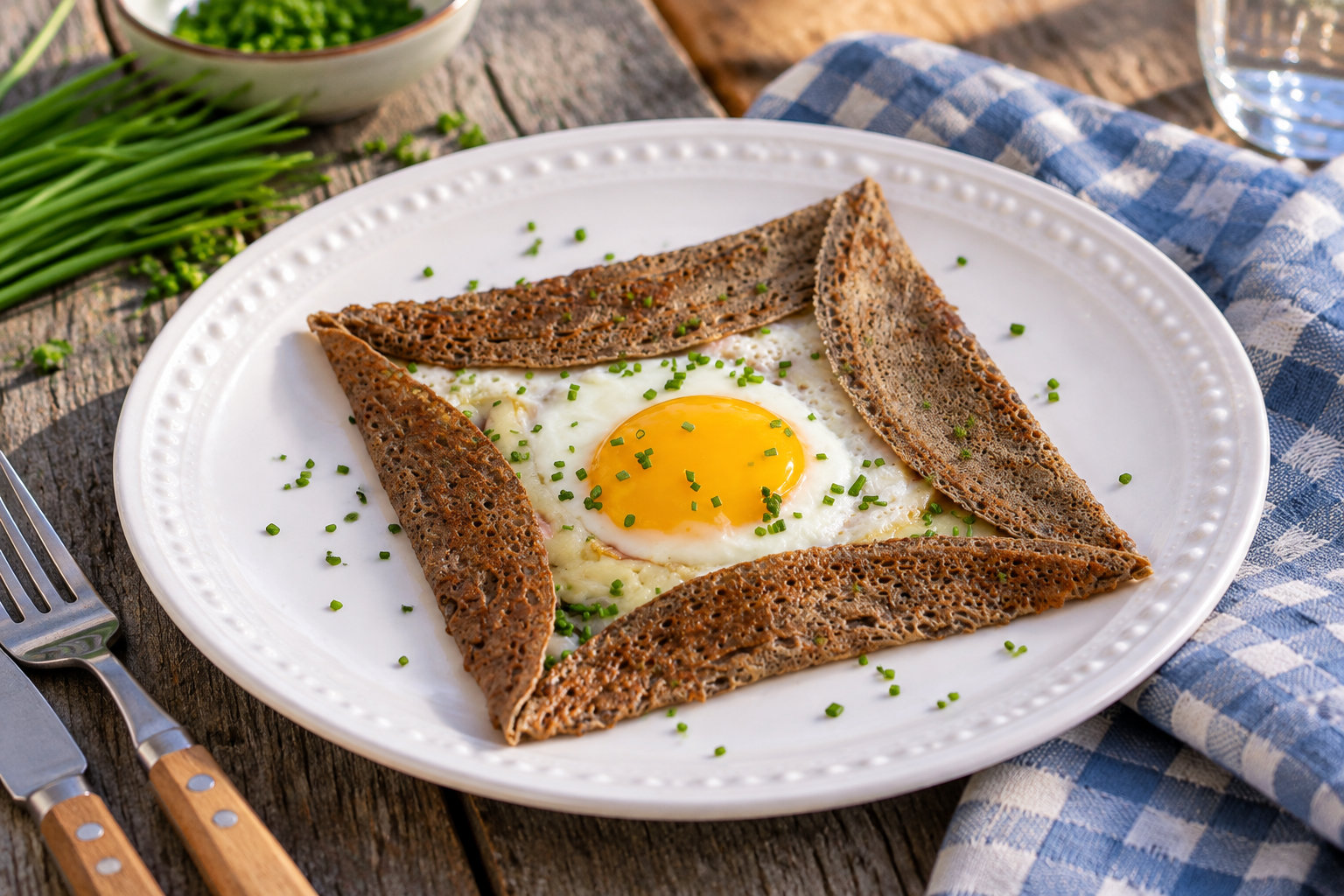
A galette is the savoury Breton pancake, made from buckwheat flour. The classic complète combines ham, egg and cheese. Other versions take sausage, smoked fish, mushrooms or seasonal vegetables.
Cancale is the address for oysters. Order them near the port or from a beachside seller. There, the briny shellfish comes straight from the open coast, not from a generic seafood counter.
Erquy is linked with scallops. Brittany’s fishing ports also serve mackerel, sardines, lobster, mussels and mixed seafood platters. The best choice changes with the catch and the season.
Before you order seafood on the coast
- Ask which port the catch came in through that morning.
- Check whether the platter lists the day’s shellfish or a fixed selection.
- Order oysters before the lunch rush clears the best stock.
Breton pastries rely on salted butter
Kouign-amann comes from Finistère. It uses almost equal parts salted butter and sugar. The crust caramelises hard, while the layers inside stay dense and glossy.
Far Breton is a custard-style cake, often made with prunes. Breton shortbread and butter biscuits turn the region’s dairy tradition into something you can carry. Buckwheat also appears in biscuits and even local whisky.
Alsace serves choucroute with tarts and baked dishes
Alsatian cuisine brings Germanic technique to the French table. You get fermentation, pork, cabbage, white wine, cream and baking, all handled with precision. Portions are generous.
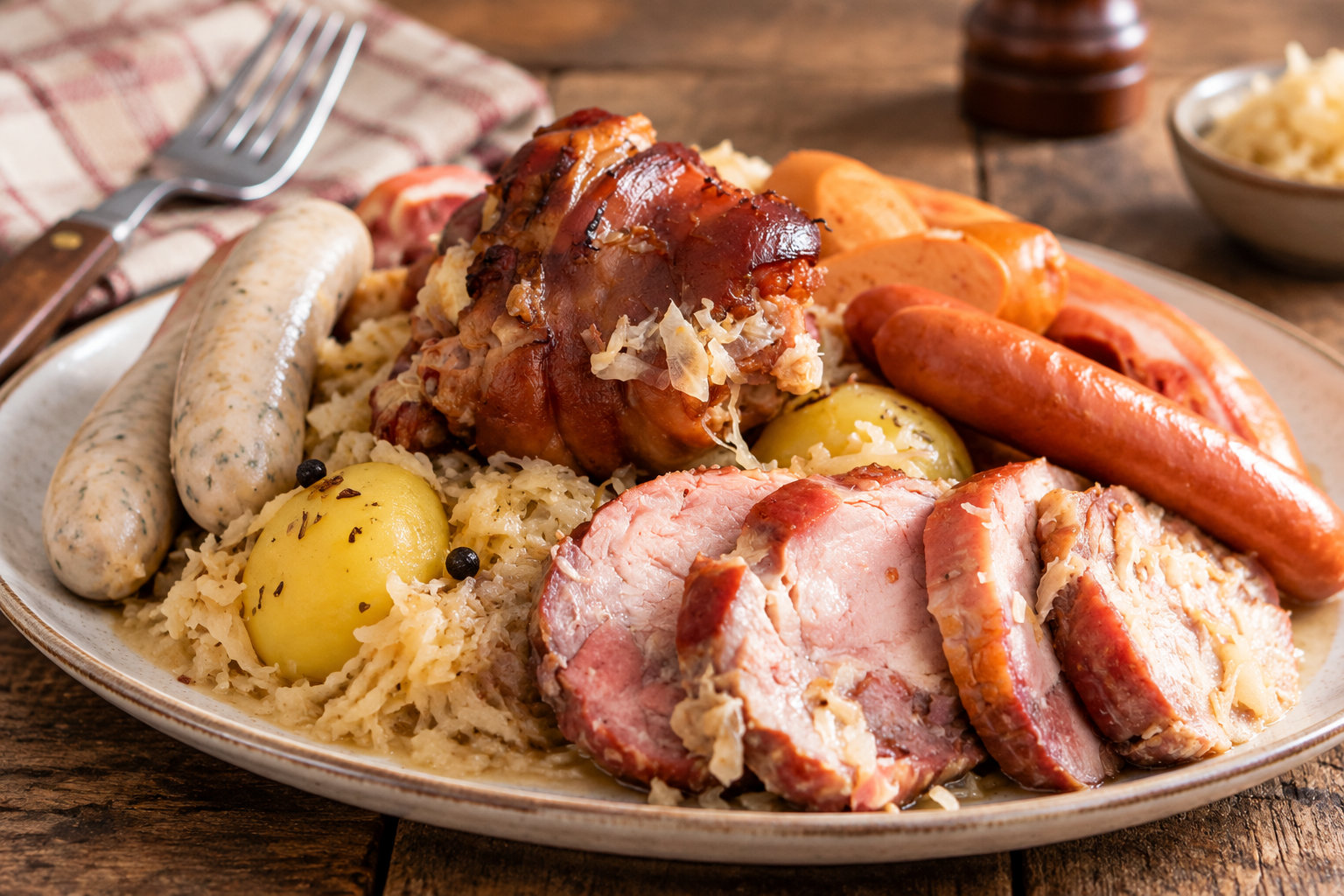
Choucroute garnie starts with fermented cabbage. Add potatoes, sausages, bacon and other pork cuts. The cabbage may simmer in beer or Alsatian white wine, which keeps the dish sharp.
The fermentation is what matters. Cabbage is traditionally salted and flavoured with juniper berries. It then ferments before cooking with the accompaniments.
Baeckeoffe mixes beef, lamb and pork with potatoes, onions, carrots and Alsatian white wine. It cooks in a ceramic casserole. The long cooking turns several meats into one deep, aromatic dish.
Flammekueche, also called tarte flambée, has a very thin dough. It is topped with crème fraîche, onions and lardons. It bakes fast in a hot oven and comes to the table on a wooden board.
Order it as a starter for the whole table. It arrives on a wooden board, and it disappears fast.
Pain d’épices brings honey and warm spice. Bredele biscuits are linked with Christmas, but specialist Alsatian bakeries sell them all year.
Burgundy’s wine dishes include bourguignon and escargots
Burgundy doesn’t put wine beside the plate. It puts wine in the pot. Red wine enriches the braises, white wine sharpens the sauces, and local products turn plain cooking into regional signatures.
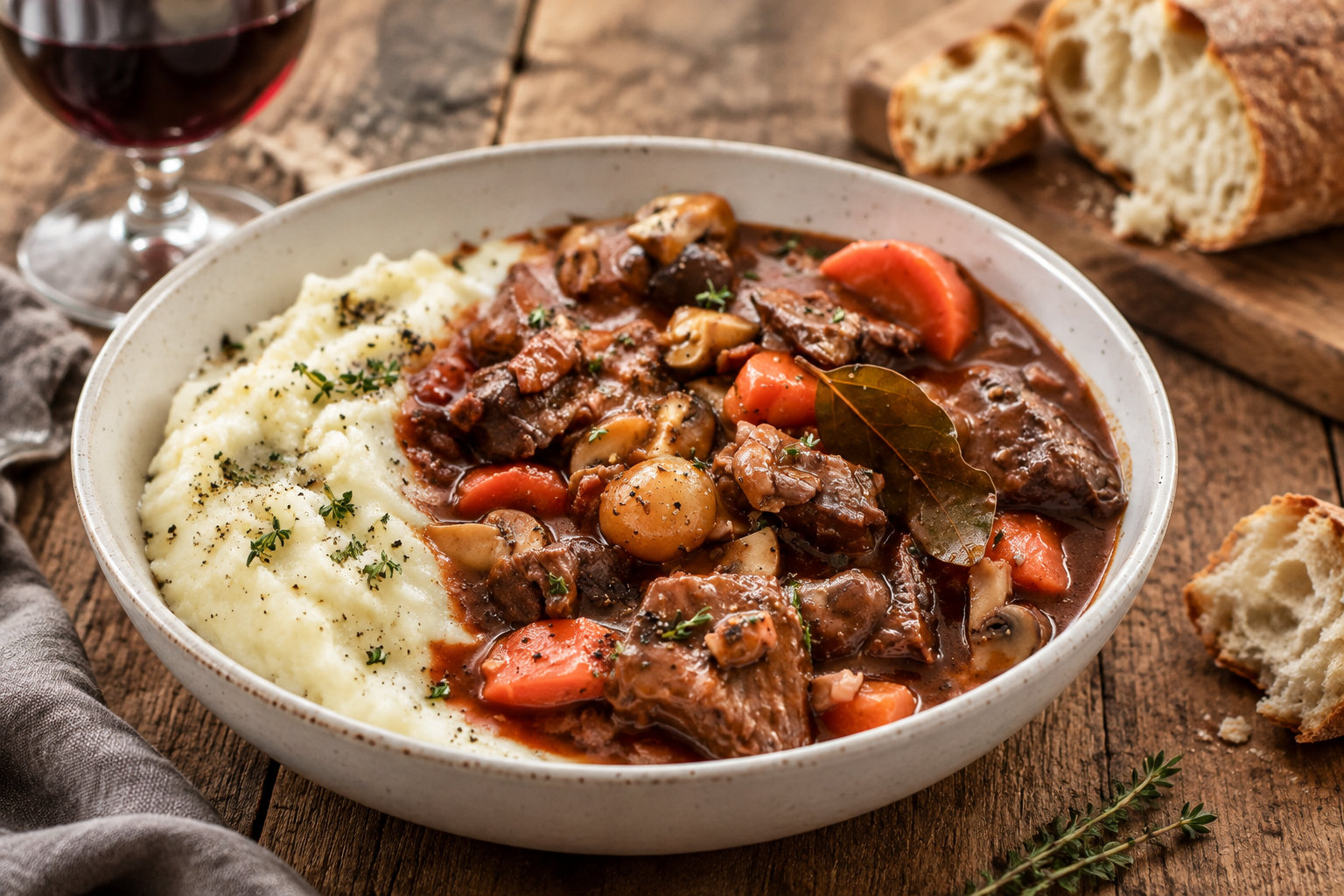
Bœuf bourguignon is simple. Beef cooks slowly in red wine with aromatics. The meat softens, and the sauce darkens. This dish rewards patience, not show.
En meurette is a preparation built on a red wine sauce. It is often served with eggs, fish or other ingredients. The sauce defines it: concentrated, acidic and rounded.
Dijon mustard adds heat and acidity to sauces, meats and dressings. Blackcurrants become syrups, creams and liqueurs. They give Burgundy a darker fruit note than its mustard reputation suggests.
Lyon and Rhône-Alpes unite city dishes with mountain food
Lyon mixes bouchon cooking, pork, poultry and river fish with the heavier dairy and potato dishes of the Alps. Is it a city or a farm table? Both. The food still comes from farms, rivers and mountain pastures, even in the heart of the city.
Three Lyon staples define the bouchon table:
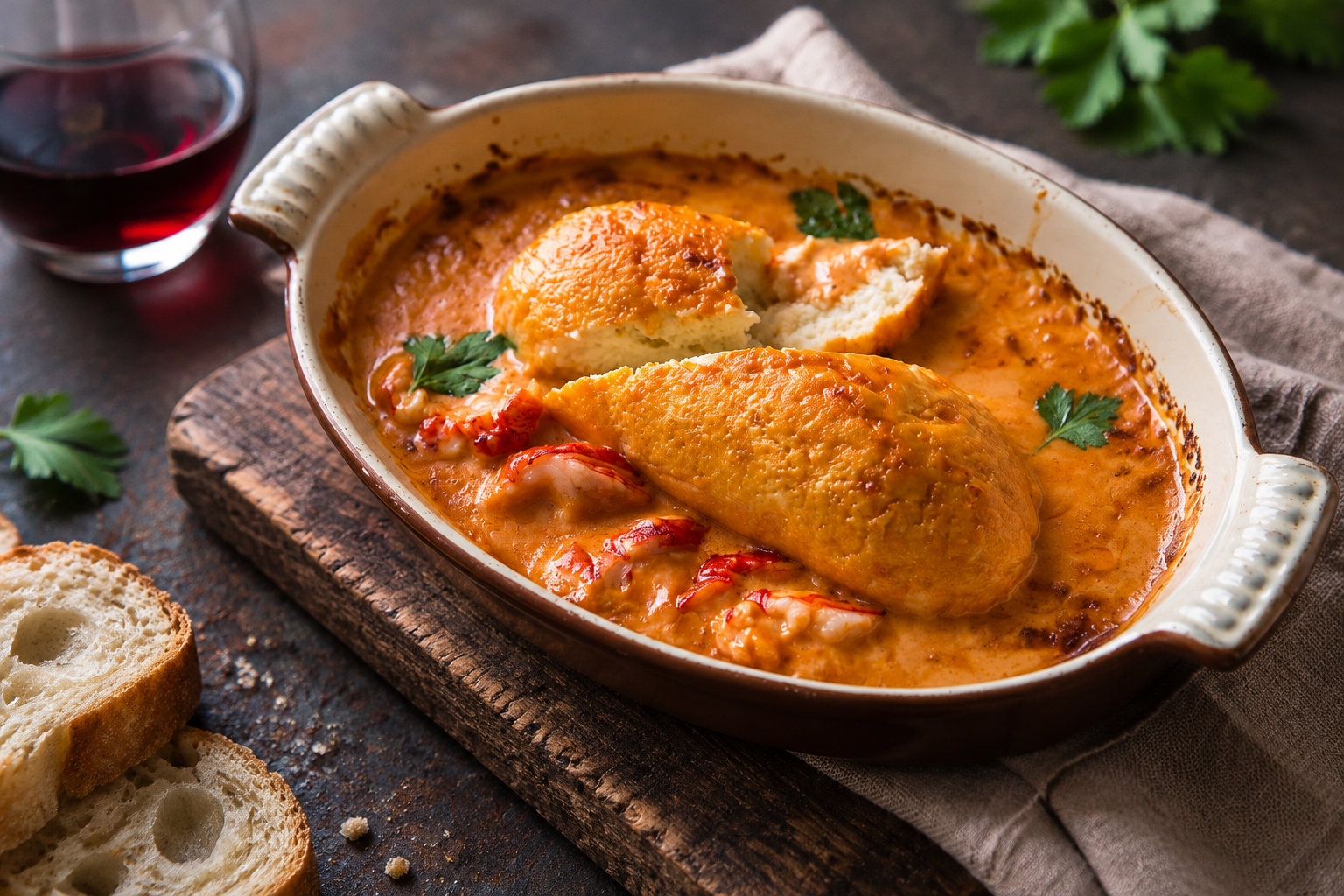
- Quenelles: elongated dumplings made from flour, bread or choux pastry. Pike quenelles served with Nantua sauce, enriched with crayfish butter, remain the classic order.
- Mâchon: a traditional Lyonnais snack built around charcuterie, cheese and bread. Rosette de Lyon uses pork, fat, spices and garlic, while saucisson brioché wraps sausage in a soft brioche crust.
- Saint-Marcellin: a mild, creamy cow’s milk cheese that changes as it matures. Cervelle de canut is a seasoned fresh cheese with cream, herbs, garlic, shallots and sometimes wine or vinegar.
Ask for pike quenelles with Nantua sauce. That is the classic order, and the one most Lyon bouchons still serve.
Ravioles are small filled pasta, linked to the Dauphiné. Rissoles are filled pastries. Gratin dauphinois uses thin potatoes baked slowly in cream, not a heavy cheese topping.
Provence and the Riviera run on olive oil, herbs and seafood
Mediterranean cooking runs the other way from Normandy. Olive oil replaces butter. Vegetables lead more often than meat. Garlic, basil, anchovy and herbs sharpen every plate.
Marseille builds bouillabaisse around rockfish
Traditional bouillabaisse uses Mediterranean rockfish. Scorpionfish, red mullet, conger eel, monkfish and weever are common choices. A serious version serves the fish and the saffron broth separately, with rouille and garlic croutons.
In Marseille, the charter requires the fish to be cut up in front of diners. The Miramar version uses at least six types of rockfish. That detail separates a ceremonial bouillabaisse from an ordinary fish soup.
Before you order a bouillabaisse
- Check that the fish is served apart from the saffron broth
- Look for rouille and garlic croutons on the table
- Ask whether the fish will be cut up in front of you
- Confirm that the Miramar version uses at least six types of rockfish
Aïoli garni pairs garlic sauce with fish, vegetables and sometimes shellfish. Brandade uses salt cod and olive oil. Anchoïade and tapenade turn anchovy and olive into rich spreads.
Nice turns vegetables into street food
Pissaladière brings onions, anchovies and olives on a bread-like base. Pan bagnat stuffs salad niçoise ingredients into a round roll. Both make sense at the Cours Saleya market or in Nice’s old town.
Ratatouille combines zucchini, aubergine, tomatoes and onions. Petits farcis fill vegetables with a seasoned mixture. The dish becomes more filling, yet it keeps the region’s vegetable-first character.
Inland Provence deepens its vegetable cooking
Daube à la provençale braises meat slowly with red wine, herbs and local aromatics. Soupe au pistou brings beans, vegetables and pasta together. Basil and garlic pistou goes in at the end.
Mountain areas add gratin dauphinois, ravioles, spinach dishes and local cheeses. The higher you climb inland, the more the cooking shifts from olive oil and fish toward cream, potatoes and dairy.
Southwest France is known for duck, confit and local produce
Southwest cuisine was built to keep food for the winter. Duck and goose give you foie gras, magret, confit and gizzards. Beans, mushrooms, walnuts, chestnuts and freshwater fish fill the country table.
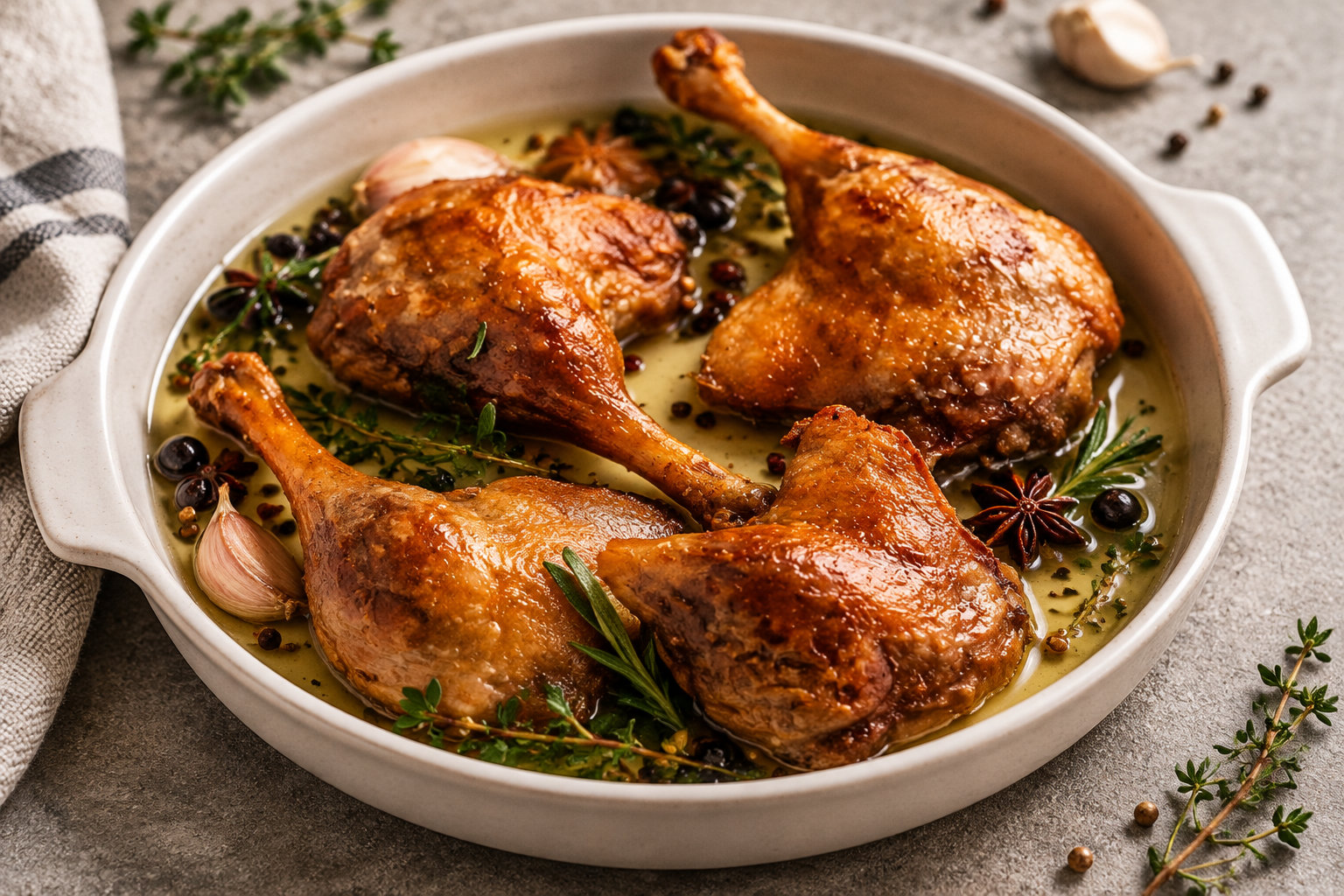
Confit de canard cooks duck legs slowly in their own fat. Magret is the breast, grilled or pan-cooked. Foie gras comes from duck or goose liver.
Garbure is a thick vegetable soup. It can hold cabbage, beans, potatoes and confit. One pot feeds the family through winter.
Salade landaise mixes salad leaves with duck gizzards, magret or foie gras. Warm meat meets crisp leaves and a sharp dressing. The result stays light, not heavy.
Ask for magret rosé, cooked medium-rare: the flesh stays juicy and the fat under the skin turns crisp. Well-done magret wastes a good bird.
Bordeaux brings canelé, a small cake with a dark caramelised crust and a tender centre. Saint-Émilion is known for its macarons. Blaye produces almond pralines.
Corsica combines charcuterie, chestnuts and brocciu
Corsican cuisine tastes of altitude, maquis herbs, chestnut forests and island livestock. Its strongest products cannot be swapped for mainland versions, because the landscape and preservation methods shape each one.
Figatellu is a pork liver sausage flavoured with garlic, spices and red wine. Coppa, lonzu and prisuttu use different cuts and curing methods, so a proper tasting should include all four rather than one generic charcuterie.
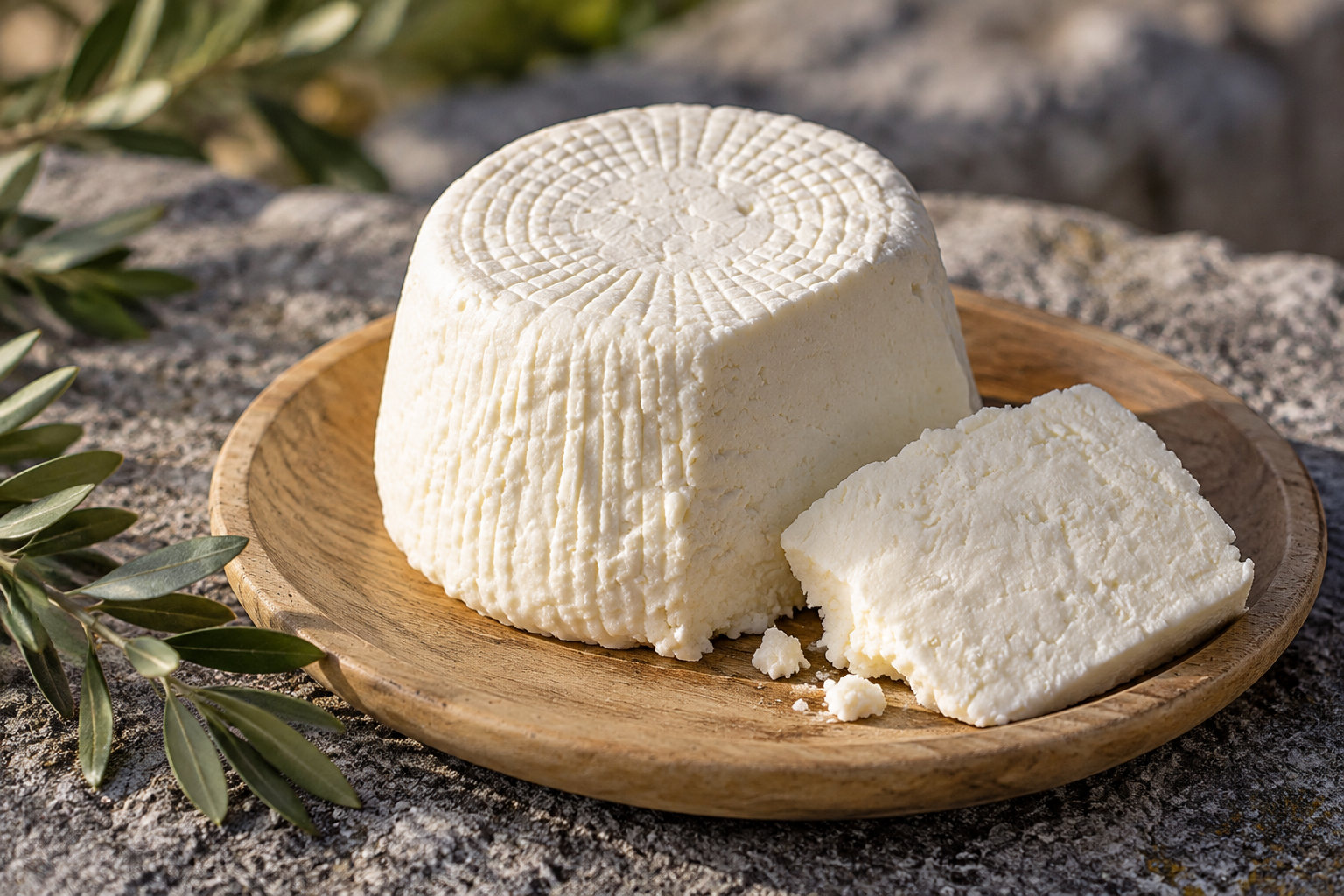
Brocciu is made from heated whey with 10% to 20% whole sheep or goat milk. Fresh production runs from December to June, after which it can be eaten semi-dry or dry as brocciu passu.
Fresh brocciu goes into omelettes, cannelloni, stuffed vegetables, migliacci and fiadone. Mind the season: in summer, ask for a matured version rather than expecting the soft winter cheese.
Pulenda uses Corsican chestnut flour in a polenta-like preparation that can accompany figatellu, brocciu and fried eggs. The flour also goes into breads, cakes, flans and savoury preparations.
Fiadone is a baked cake made with brocciu, eggs, sugar and lemon zest. It stays low and creamy inside, with a browned surface rather than the tall rise of a conventional cake.
Central France and the Loire Valley offer rillettes and sweets
The Loire table moves between river fish, pork, goat cheese, white wine, beans and fruit. It is less forceful than the Southwest, but its preserved meats and sauces still carry real weight.
Rillettes du Mans cook pork slowly until it is tender enough to shred, then cool into a spread for rustic bread. Rillons use cubes of confit pork belly and turn up in a salad, with lentils or beside potatoes.
Rillettes de Tours follow the same broad preservation logic but belong to Touraine. Tours also offers Sainte-Maure-de-Touraine goat cheese and local wines such as Vouvray and Montlouis-sur-Loire.
Beurre blanc, a sauce of butter, white wine and shallots, belongs to the Nantes area and pairs especially well with pike-perch. Mogettes de Vendée are small white beans commonly served with ham or country dishes.
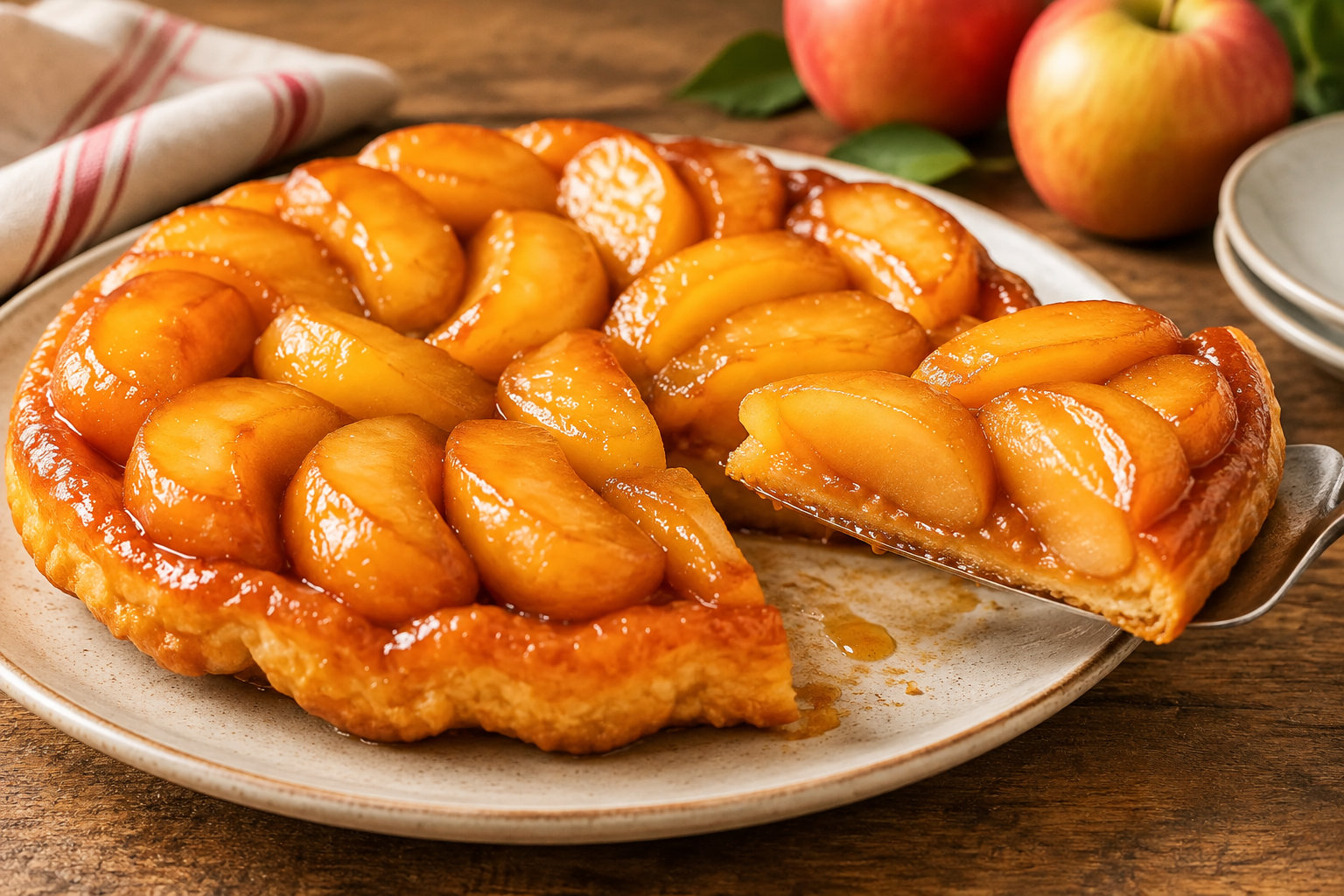
Tarte Tatin originated in Sologne. The apples cook in caramel before the pastry goes on top, and the tart is turned upside down just before serving so the fruit stays glossy and soft.
French menu terms help visitors order regional dishes
Once you know what a restaurant is offering, the menu gets much easier to read. French dining uses several terms for price, format and service. Mix them up, and a regional meal can become an order you never meant to place.
Starters and mains use precise menu names
Four terms cover most of a French meal:
- Entrée: the starter, not the main entrance.
- Plat or plat principal: the main course.
- Dessert: the final sweet course.
- Hors-d’œuvre: small appetisers or an opening plate.
Regional names include galette complète, carbonade flamande, choucroute garnie, quenelle de brochet, bouillabaisse, confit de canard, rillettes de Tours and fiadone. Keep the French name on the menu when you order. Translations tend to blur the difference between dishes.
La carte and le menu are different offers
Three terms cover price and format:
- La carte: the full list of dishes, priced individually.
- Le menu: usually a set meal with a fixed number of courses.
- Menu dégustation: a longer tasting sequence chosen by the chef.
Ask “Quelle est la spécialité de la région ?” to get the regional speciality. The waiter will know the answer.
Before you order
- Check whether the price is per dish or per set menu before you sit down.
- Count the courses in a menu dégustation and ask whether it is the chef’s full sequence.
- Ask “Quelle est la spécialité de la région ?” and keep the French name when you order.
Stop ordering the dish that travels well. Choose a region, check its protected names on the official French quality map, and build your route around them. Then order the French name exactly as it appears on the menu, and refuse the imitation.
Frequently Asked Questions
What is France’s most traditional food?
France has no single traditional food, and that is the honest answer. Bœuf bourguignon, bouillabaisse, choucroute, galettes, cassoulet, confit de canard and ratatouille each reflect a different climate, set of ingredients and cooking method. Pick the dish tied to the first region on your route, because it will taste most convincing there.
What are 10 famous French foods?
The ten most recognised are bouillabaisse, bœuf bourguignon, choucroute garnie, galette complète, ratatouille, confit de canard, quenelle de brochet, tarte Tatin, kouign-amann and fiadone. Fame does not guarantee quality, so check where each one comes from before you order it. A bouillabaisse eaten far from the Mediterranean is rarely the dish you came for.
What are 20 classic French dishes everyone should try?
Choose your twenty by region and season, not from one generic French menu. Pick three or four dishes for each region on your route, then match them to your travel months: winter braises and choucroute, autumn shellfish and game, spring fresh brocciu and young vegetables.